
Multiscale Simulation of Quantum Transport and Device-Scale Multiphysics

Already registered? Click here to login now!
In this webinar, Enrico Di Lucente, a postdoctoral research scientist in the Department of Applied Physics and Applied Mathematics at Columbia University, will present a multiscale framework that bridges ab initio quantum transport simulations based on the microscopic Boltzmann transport equation with continuum descriptions derived from them through coarse graining. The framework retains the essential quantum-mechanical physics while enabling simulations of realistic device geometries within the COMSOL Multiphysics® software.
First, Enrico will discuss the implementation of the viscous heat equations as a dedicated physics interface in COMSOL Multiphysics® and demonstrate how it enables the predictive simulation of fluid-like heat transport, including heat vortices and backflow. Then, he will outline future extensions toward coupled electron–phonon hydrodynamics and viscous thermoelectric equations, opening the way to the simulation and design of more efficient, nondiffusive electronic devices.
AI is progressing rapidly, albeit at the enormous energy cost of data centers, whose operation relies on classical, diffusive electronics governed by Ohm’s law for electronic transport and Fourier’s law for heat conduction.
Recent pioneering experiments in high-purity materials at cryogenic temperatures have observed that charge and heat can propagate very efficiently and exhibit collective behavior reminiscent of fluids, including coherent waves, vortices, and backflow. These observations suggest new paradigms for exploiting these low-dissipation regimes in next-generation devices.
Speaker:
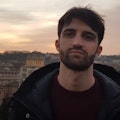
Enrico Di Lucente
Postdoctoral Research Scientist, Dept. of Applied Physics and Mathematics
Columbia University
Enrico Di Lucente is a Postdoctoral Research Scientist in the Department of Applied Physics and Applied Mathematics at Columbia University. He received his PhD in Materials Science and Engineering from EPFL, where his research focused on theoretical and computational approaches to quantum and hydrodynamic thermal transport. During his PhD, he was also a visiting researcher at the Cavendish Laboratory of the University of Cambridge. He previously earned an MSc in Physics with honors from Sapienza University of Rome. His research combines first-principles materials modeling, transport theory, and multiphysics simulations to investigate heat conduction in quantum materials and nanoscale devices.
