Anritsu introduces 2×2 MIMO software for MT8862A

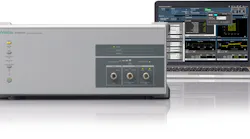
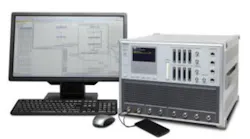
Richardson, TX. Anritsu has introduced 2×2 MIMO Measurement Software MX886200A-010 that extends the measurement capability of its Wireless Connectivity Test Set MT8862A. With the software installed, the company said, the MT8862A is the first solution that supports output signal quality, transmit power, receiver sensitivity, and 2×2 MIMO measurements on IEEE802.11ac WLAN equipment under actual operating conditions, giving engineers greater confidence in their designs.

The software allows key WLAN measurements to be made easily and quickly for greater product throughput. Engineers simply connect the MT8862A test set to the WLAN device under test (DUT) and press a few keys on a PC to perform the measurements. With the ease of verification, engineers with any level of experience can conduct highly accurate tests.
Supporting IEEE802.11a/b/g/n/ac, the Wireless Connectivity Test Set MT8862A is capable of measuring the performance of an 802.11ac-capable WLAN DUT in the actual operating state. With the built-in Network Mode, RF performance characteristics as well as waveform coverage range can be measured over-the-air (OTA), eliminating the need for dedicated vendor-provided test modes typically required for WLAN device verification. Removal of a physical connection establishes a more accurate representation of the DUT performance in a real-world environment, as the measurements take into consideration the effect of the internal wireless antennas.
https://www.anritsu.com/en-us/test-measurement/products/mt8862a
About the Author
 Rick Nelson
Contributing Editor
Rick Nelson is a technical journalist who has served as executive editor of Test & Measurement World, chief editor of EDN, and executive editor of EE-Evaluation Engineering. He has also contributed to publications including Vision Systems Design and Electronic Design, and he has participated in many live panel discussions and webcasts. Rick has also held systems-engineering and product-development positions at General Electric and Litton Industries. He received his B.S.E.E. degree from The Pennsylvania State University.
Comment About the Article
To join the conversation, and become an exclusive member of Electronic Design, create an account today!
 Leaders Logo
Leaders relevant to this article: