Embedded Virtualization: From Concept to Implementation—A Case Study
What you'll learn:
- Where workload consolidation delivers the most impact in modern embedded applications.
- How test & measurement applications can reduce hardware complexity and improve performance with virtualization.
- Why integrated solution platforms accelerate the transition to consolidated, future-ready systems.
In the first two parts of this series, we explored how workload consolidation delivers benefits such as reduced costs and streamlined development. We also explained how integrated solution platforms have transformed virtualization from a complex integration challenge into an accessible and practical technology. But this potential only matters when it delivers real-world results.
This final article moves from concept to implementation with a case study. Ono Sokki, a vendor of automotive test and measurement applications, adopted virtualization to reduce one of its systems from six industrial PCs to a single hardware platform. Simultaneously, they modernized its product and simplified deployment.
Applications that Benefit from Workload Consolidation
Before diving into the case study, it’s worth looking at where workload consolidation delivers the greatest impact. The benefits are especially clear in applications that must balance real-time control, data processing, and secure connectivity, all within a compact, efficient system architecture.
AI and machine learning illustrate this well. By consolidating AI workloads with control and visualization tasks on one platform, OEMs reduce hardware overhead and enable real-time, local inference without latency or external dependencies. Edge computing also benefits, as systems at the edge must process sensor data, provide operator interfaces, and make time-sensitive decisions in constrained environments.
Consolidation allows these functions to run in isolated virtual machines (VMs) or containers, improving scalability without sacrificing performance.
Such features are especially important in fields like industrial automation, medical imaging, and test and measurement. In these markets, consolidation enables OEMs to meet modern performance demands without increasing system complexity.
Cutting Complexity with Workload Consolidation
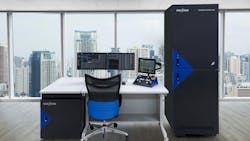
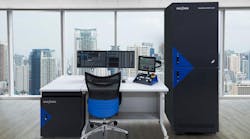
The experience of Ono Sokki, a Japanese manufacturer of test systems for automotive and industrial applications, illustrates these features. The company offers a number of complex, multifunction systems like its Flexible Automatic Measuring System (FAMS), notable for its high-speed data acquisition, advanced real-time processing, and low-latency networking (Fig. 1).
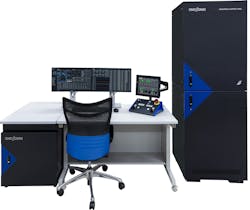
Previous systems such as the FAMS-R5 required multiple industrial PCs for different test functions, leading to high costs, complex cabling, and limited flexibility. As data volumes grew, the need for a scalable, software-defined solution became clear.
With the FAMS-R6, Ono Sokki introduced a virtualized architecture based on a COM Express Type 7 module with an Intel Xeon D processor. Using hypervisor technology, it runs both an RTOS and a general-purpose OS on the same platform, ensuring that each workload receives the compute, memory, and I/O bandwidth it needs without interference.
>>Download the PDF of this article, and check out the first two parts of this series
 dreamstime_suwinpuengsamrong_88792593
This consolidation replaces up to six industrial PCs with one compact system, lowering hardware costs, simplifying setup, and eliminating redundant cabling. High-speed 10-GbE interfaces enable real-time data acquisition, while distributed storage ensures fast, low-latency data exchange.
How Hypervisors Reduced System Complexity
As explained in the first part of this series, by using a type-1 hypervisor (bare metal), it’s possible to split the physical resources, like CPU, memory, or I/Os of a system, and distribute them across multiple VMs, as well as provide access to shared resources (e.g. network or storage). By partitioning the cores and physical memory along with access to specific I/Os, the hypervisor can create multiple complete systems that provide native performance and will not interfere with each other (Fig. 2).
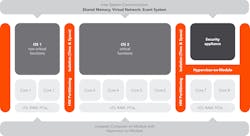
To ensure that the various workloads don’t contend for resources, the integrated hypervisor used in the FAMS-R6 system logically assigns various components of the system exclusively to individual VMs, using different methods:
- Core-pinning: Specific CPU cores can be reserved for a VM, isolating them from the others to ensure that there are no spurious latency spikes.
- Memory partitioning: Each VM is allocated a fixed, contiguous block of physical RAM to ensure that the memory usage of one VM partition doesn’t impede or exhaust the others.
- I/O partitioning: I/O devices, typically PCIe peripherals, could be configured to be bound to a specific VM, therefore giving the VM direct low-level access to the hardware.
If a VM in the FAMS-R6 system doesn’t require extremely precise and fast real-time control, it needn’t be directly and exclusively connected to the hardware. In this case, the hypervisor can provide a virtual device.
For example, a single physical network interface card (NIC) doesn’t need to be physically dedicated to each VM. Instead, multiple VMs can share the same physical NIC. Since no single VM requires the full bandwidth on its own, it’s more cost-effective and efficient to share the resource.
For USB devices, the hypervisor can precisely control which VM is allowed to access which device. It identifies them via their USB ID, e.g. a specific sensor or a flash drive, and assigns them accordingly. In addition, the hypervisor can create a shared memory area that multiple VMs are able to access simultaneously. This is useful when different OSs within the FAMS-R6 need to work with the same sensor data without constantly copying it back and forth.
The Role of Integrated Solution Platforms
As demonstrated, integrated solution platforms play a critical role in simplifying the transition from legacy architectures to virtualized, consolidated systems. In the case of the FAMS-R6 system, Ono Sokki implemented a COM Express Type 7 module featuring an Intel Xeon D processor (Fig. 3).
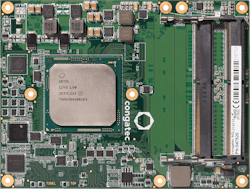
The system runs both a RTOS (VxWorks) and a general-purpose OS (Windows). This ensures that each VM operates in isolation, eliminating performance interference and avoiding common issues like the "noisy neighbor" problem.
Because these platforms are built for compatibility and interoperability, existing applications can be migrated more quickly and with less risk. Validated software stacks are systematically tested, documented, and updated, which helps reduce security and compliance concerns by proactively addressing known vulnerabilities.
Just as important, the modular nature of the server-on-module platform gives Ono Sokki a clear path forward. With a scalable hardware base and isolated VMs for each function, the system can be easily updated or expanded to meet future requirements.
Conclusion
Workload consolidation has moved beyond theory to a practical solution to today’s design challenges. As the example illustrates, modern hardware/software stacks are already helping OEMs use virtualization to reduce hardware requirements, simplify system architecture, and support increasingly complex workloads on a single platform.
For OEMs facing growing demands around performance, security, and connectivity, now is the time to consider workload consolidation — not as a future goal, but as a practical design strategy ready for deployment.
>>Download the PDF of this article, and check out the first two parts of this series
dreamstime_suwinpuengsamrong_88792593About the Author
 Andreas Bergbauer
Andreas Bergbauer
Manager Solution Management, congatec
Andreas Bergbauer is Manager Solution Management at congatec. He has over 15 years of professional experience in product management, IT project management, and software development. After graduating with a degree in Business Informatics from Deggendorf Institute of Technology, he held leadership positions at msg and ConVista. With his expertise in product strategy and technological innovation management, he’s now involved in developing application-ready solution platforms in embedded computing.
Comment About the Article
To join the conversation, and become an exclusive member of Electronic Design, create an account today!
 Leaders Logo
Leaders relevant to this article: