Physical AI's Push Shifts into High Gear (Download)
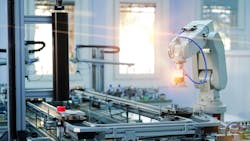
For a long time, AI models have had their heads in the cloud. Traditionally, these models have been trained and run inside data centers, and they could not directly affect the physical world. But as AI accelerators matured, edge devices started running models locally, capturing data close to the source to enable lower-latency inference. However, the output of those models still required direct human interaction to manifest in a physical action.
Today, innovations in safety, security, and reliability have made it possible for advanced driver-assistance systems (ADAS) in cars and industrial robots to act safely without humans in the loop. These innovations are helping AI transition from being a digital assistant that informs decisions to AI that can not only sense and think, but also act. This is where physical AI, sometimes referred to as embodied AI, comes into play.
