Hybrid Data/Detention Centers to Provide Green Power for AI and Cost-Effective Security

An innovative public/private partnership in Northern New Jersey may offer a novel, humane, and cost-effective blueprint that addresses the nation’s rising concerns about the impacts of AI data centers and the growing number of detention centers being built to house suspected illegal immigrants and other undesirables.
A pilot project, which would transform a 470,000-square-foot industrial warehouse, located in Randolph N.J., into a self-sufficient “hybrid data/detention facility” (HDDF) is in the final stages of approval, with construction scheduled to begin on April 1 (Fig. 1). The dual-use facility will include a large AI data center, operated by Planeteer, a leading defense contractor, and a 1,500-bed detention center administered by a private contractor, under the authority of the U.S. Ministry of Peace’s Internal Control and Enforcement (ICE) agency.
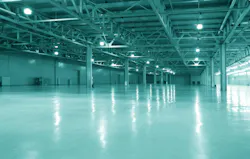
When complete and fully populated, most of the power needed to run Planeteer’s massive server banks will be provided by the detention center’s “guests.” They will spin generator-equipped treadmills and exercise bikes for 8-10 hours a day to help defray the cost of their room and board.
“We are thrilled to partner with ICE in this exciting joint venture”, said Al Krap, CEO of Planeteer, whose large fleets of data integration and analytics platforms provide AI-based services to government agencies, financial institutions and commercial enterprises. “Until now, our efforts to locate a data center in Northern New Jersey had been hampered by the limits of the area’s aging power grid.”
He added, “None of the towns we approached were willing to allow us to build a suitably sized onsite generating plant, citing concerns of the noise and air pollution they might generate. Meanwhile, our partners at ICE were running into similar resistance from local governments who were concerned about the additional load that thousands of new residents would put on their waste treatment plants and other local infrastructure.”
According to Krap, he got the inspiration for co-locating the two facilities when he learned about a large discount retail chain that was building housing units above one of its new warehouse outlets in downtown Lose Angeles. The units, which will provide affordable housing for its workers and other locals, are expected to be profitable for the retailer, help reduce employee turnover, and create a social and economic anchor point for the community.
“I was so impressed at how a market-based solution could solve Los Angeles’ housing problems much more effectively than an inefficient government program could ever hope to do, that I decided to leverage the same synergies to overcome the barriers we faced with our plans for expansion” said Krap.
Adding a Second Floor and Dwelling Pods
Conversion of the empty warehouse in Randolph, N.J., to an operational HDDF will involve the addition of a second floor that will house Planeteer’s AI servers and administrative facilities. While the data center is under construction, a second crew will begin to break the existing warehouse’s cavernous open floor into of four secure areas, each containing a “dwelling pod,” capable of housing 375 “guests.”
Each pod will have its own cafeteria and hygiene facility, which the guests can be securely directed to via a series of access-controlled corridors. The residents will also use the corridors to gain entrance to their pod’s “fitness room,” where they have the opportunity earn credit for sundries, phone calls, and their meal rations by generating electricity to power the facility (Fig. 2).
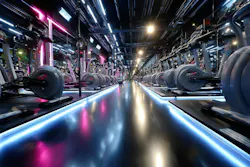
When complete and fully populated, it’s estimated that the fitness rooms will produce enough electricity to meet 70% to 80% of the data/detention center’s needs. The remainder will be produced by a small mixed-fuel co-generation plant.
The plant’s generators will burn a mixture of commercial natural gas and locally sourced methane produced by a bio-digestor, located in the HDDF’s waste treatment plant. In addition to converting the building’s sewage into fuel and agricultural-grade compost, the digestor will efficiently process the facility’s kitchen waste and the remains of any detainees who suffer from “uncorrectable health issues” during their stay.
“In much the same way that the realtor’s hybrid retail/residential concept was a win/win/win for the company, its employees, and the communities they serve, HDDF leverages synergies to make efficient use of an untapped resource while providing cost-effective housing for a growing number of foreign and domestic detainees that would otherwise be yet another burden on our taxpayers.
“We believe that co-locating our server farms with a clean, renewable source of bio-sourced electricity will enable us to be good neighbors to our host communities, strengthen our nation’s security, and our shareholders’ bottom line,” concluded Karp.
More April 1st Humor
If you liked this article then check out the rest of our April 1st offerings from this and past years. We hope you enjoy them.
 Wizard April 1st
About the Author
 Lee Goldberg
Lee Goldberg
Contributing Editor
Lee is the author of the popular PowerBites series.
Lee Goldberg is a self-identified “Recovering Engineer,” Maker/Hacker, Green-Tech Maven, Aviator, Gadfly, and Geek Dad. He spent the first 18 years of his career helping design microprocessors, embedded systems, renewable energy applications, and the occasional interplanetary spacecraft. After trading his ‘scope and soldering iron for a keyboard and a second career as a tech journalist, he’s spent the next two decades at several print and online engineering publications.
Lee’s current focus is power electronics, especially the technologies involved with energy efficiency, energy management, and renewable energy. This dovetails with his coverage of sustainable technologies and various environmental and social issues within the engineering community that he began in 1996. Lee also covers 3D printers, open-source hardware, and other Maker/Hacker technologies.
Lee holds a BSEE in Electrical Engineering from Thomas Edison College, and participated in a colloquium on technology, society, and the environment at Goddard College’s Institute for Social Ecology. His book, “Green Electronics/Green Bottom Line - A Commonsense Guide To Environmentally Responsible Engineering and Management,” was published by Newnes Press.
Lee, his wife Catherine, and his daughter Anwyn currently reside in the outskirts of Princeton N.J., where they masquerade as a typical suburban family.
Comment About the Article
To join the conversation, and become an exclusive member of Electronic Design, create an account today!
 Leaders Logo
Leaders relevant to this article: