Urgency Sensors Enable Reliability as a Service for EVs
What you’ll learn:
- In the 1960s, researchers discovered the Murphy junction diode, which would tend to malfunction at the most inconvenient possible moment,
- In the 1970s, urgency sensing technology was commercialized and used by manufacturers of photocopiers, appliances, and other capital equipment to selectively induce malfunctions that required expensive service calls.
- EV makers are beginning to adopt an enhanced version of the same technology to enhance their profits by offering subscription-based reliability services for their vehicles.

If you’re an electronics professional old enough to remember watching new episodes of Mork and Mindy or Salvage 1 on TV, you’re probably familiar with the humble urgency sensing circuit (USC). It’s a component commonly found in copy machines, home appliances, and other electronic products of 1970s.
Surprisingly, that obscure and nearly forgotten electronic component is enjoying newfound popularity with automakers. USCs now are being used to solve an emerging problem with their EVs.
At its simplest, a USC consists of an op amp and a Murphy junction diode (see “It’s Not Just the Law: A Brief History of Urgency Sensing, below), which can detect a user’s levels of concern and anxiety, and produce an output voltage proportional to the criticality of the task being performed in their general proximity (Fig. 1).
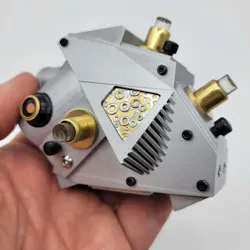
One of the earliest, and most popular, applications for these circuits was generating field service calls for the large high-speed photocopiers that were essential equipment for nearly every office during that era. Rather than use a simple random number generator to trigger paper jams, toner leaks, and other faults, a USC would enable the copier to operate reliably most of the time. It would only require an expensive visit from a field service technician when the customer was eager to pay for the service.
Demand Downslide for USCs
Demand for USCs declined as photocopiers became smaller and inexpensive enough whereby most offices could have several machines, each being replaceable for less than the cost of an extended service contract. Appliance manufacturers continued to use them in washing machines and refrigerators for another decade or so, until the growing complexity of so-called “smart” washers and refrigerators introduced enough naturally occurring random failures to make the sensors unnecessary.
By the end of the1980s, demand for USCs dwindled to the point where nearly all semiconductor makers stopped manufacturing them, except for YoYo Dyne semiconductors. The company kept them in limited production at its Grovers Mill, N.J. facility for a handful of legacy customers.
On a sidenote, YoYo Dyne’s facilities were pressed into service during the early days of the COVID-19 pandemic when it was discovered that emissions from dark emitting diodes (DEDs), a variant of the USC, proved to be a highly effective way to kill the deadly Corona virus.
USCs Making a Comeback
Recently, however, interest in USCs has grown dramatically as automakers struggled to adjust to the challenging economics of the electric-vehicle market.
Several legacy manufacturers were caught by surprise when their new EVs required drastically lower levels of maintenance and repairs. While customers were attracted to the EV’s higher reliability and negligible maintenance costs, dealers suffered as the revenue streams traditionally generated by oil changes, tuneups, and other routine service work evaporated.
“The damned EVs are so much simpler that, besides replacing tires and the occasional brake job, the only time we see them in the shop these days is when they’ve gotten into an accident” said Brad Thayer, VP of customer service for Bavarian Mechanical Works’ (BMW), North American division.
Faced with rapidly dwindling profits, BMW and other legacy carmakers experimented with various ways of generating semi-random faults in their EV’s drivetrains, climate controls, and infotainment systems. After exploring several approaches, several leading companies, including BOTCH, a European automotive components manufacturer, concluded that USC-based fault generators would be a cost-effective and reliable technology for strategically moderating EV reliability.
USCs Become Programmable
As part of a strategic partnership, BOTCH and YoYo Dyne developed a line of programmable, single-chip USC devices that are less expensive and more compact and energy-efficient than their 70s-era predecessors. The sensors are also equipped with a CANbus interface, which allows their urgency threshold to be set by one of the vehicle’s ECUs or via remote over-the-air (OTA) software update (Fig. 2).
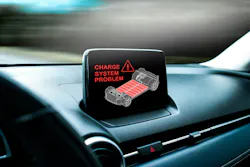
Thanks to variable thresholds, programmable USCs made it possible to offer different levels of reliability as part of the various trim and option packages they offer to their customers. Most EV makers have chosen to have their vehicles delivered to the dealer with a default “ICE-grade” reliability setting. This can be easily adjusted upwards, when the firmware that supports other optional features, such as autopilot, extended range, or advanced safety capabilities, are enabled.
“This gives our customers the option to spend a little more up front to unlock the full level of reliability the manufacturer’s vehicles can offer,” explained Janice Harrigton, a senior business strategy consultant at Boozy-Ellen Humbelton.
RaaS Subscriptions
Some automakers have taken a different approach to marketing their premium reliability services by offering them on a subscription basis. BMW, for example, has announced plans to offer monthly subscriptions for three different levels of Reliability-as-a-Service (RaaS) for its 2027 EV products.
“The subscription model we offer for our heated seats proved to be so successful that extending it to this area of the BMW experience seemed like the logical next step,” said VP Thayer.
Beginning with the 2027 model year, the company’s EVs will be programmed to support full reliability for 12 months at no charge, with the option to continue the premium service or opt for lower levels of driving confidence.
“This win/win strategy allows us to deliver our company’s legendary quality in a cost-effective manner that’s tailored to our customer’s budget,” concluded Thayer. Several other EV makers are expected to adopt RaaS strategies for their EV products before the close of the 2026 model year.
It’s Not Just the Law: A Brief History of Urgency
Sensing Murphy junction diodes (MJDs) were originally discovered at Bell Laboratories by a team of scientists who were doing research on a class of light-absorbing semiconductors, later known as dark emitting diodes (DEDs). While early DEDs demonstrated the remarkable ability to project cones of darkness, they were somewhat unreliable and prone to seemingly random failures.
As the researchers attempted to identify the mechanism causing glitches in the DEDs, they realized that the devices behaved very reliably in their labs. They also discovered that virtually every glitch occurred just before the circuits were to be used in demonstrations for the company’s executive management.
The diodes’ erratic performance was eventually traced to minute imperfections in their junction structure, which caused them to exhibit statistically anomalous behavior in the presence of anxiousness, anger, and other types of emotional stress. Once the mechanism was identified, the team developed a fabrication process which could create high concentrations of the flaws within the diode junction in a controlled manner.
The new class of devices, euphemistically referred to by their inventors as “Murphy junction diodes” in honor of American aerospace engineer Edward A. Murphy Jr. They remained a laboratory curiosity until the late 1960s, when YoYo Dyne, a spinoff from the nearby Bell Labs, acquired the devices’ patent rights and began production of the first commercially available MJDs and DEDs.
More April 1st Humor
If you liked this article then check out the rest of our April 1st offerings from this and past years. We hope you enjoy them.
 Wizard April 1st
About the Author
 Lee Goldberg
Lee Goldberg
Contributing Editor
Lee is the author of the popular PowerBites series.
Lee Goldberg is a self-identified “Recovering Engineer,” Maker/Hacker, Green-Tech Maven, Aviator, Gadfly, and Geek Dad. He spent the first 18 years of his career helping design microprocessors, embedded systems, renewable energy applications, and the occasional interplanetary spacecraft. After trading his ‘scope and soldering iron for a keyboard and a second career as a tech journalist, he’s spent the next two decades at several print and online engineering publications.
Lee’s current focus is power electronics, especially the technologies involved with energy efficiency, energy management, and renewable energy. This dovetails with his coverage of sustainable technologies and various environmental and social issues within the engineering community that he began in 1996. Lee also covers 3D printers, open-source hardware, and other Maker/Hacker technologies.
Lee holds a BSEE in Electrical Engineering from Thomas Edison College, and participated in a colloquium on technology, society, and the environment at Goddard College’s Institute for Social Ecology. His book, “Green Electronics/Green Bottom Line - A Commonsense Guide To Environmentally Responsible Engineering and Management,” was published by Newnes Press.
Lee, his wife Catherine, and his daughter Anwyn currently reside in the outskirts of Princeton N.J., where they masquerade as a typical suburban family.
Comment About the Article
To join the conversation, and become an exclusive member of Electronic Design, create an account today!
 Leaders Logo
Leaders relevant to this article: