Autonomous vehicles seem poor alternative to public transportation

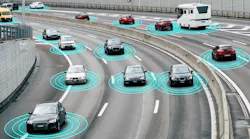
Autonomous vehicles represent a promising alternative to traditional public-transportation systems in the minds of some city officials. Yet proponents could have “…unrealistic hopes for driverless cars [that] could lead cities to mortgage the present for something better they haven’t seen,” writes Emily Badger in The New York Times.
She quotes Beth Osborne, a senior policy adviser with Transportation for America as saying, “They have imbued autonomous vehicles with the possibility to solve every problem that was ever created in transportation since the beginning of time. That might be a tad bit unrealistic.”
The driverless car proponents counter that officials wedded to “19th-century technology” will waste billions, Badger reports. Some even advocate paving over the tracks of the New York City subway so autonomous vehicles could operate in the tunnels—with tracks you are stuck with trains.
As for cities considering new projects, Badger quotes Frank Chen, a partner with the venture capital firm Andreessen Horowitz, as saying, “Don’t build a light rail system now. Please, please, please, please don’t.” Chen contends we should wait to see how the economics of self-driving cars plays out.
However, the numbers still seem to be on the side of mass transit. A roadway’s theoretical maximum saturation flow rate is 1,900 vehicles per hour per lane, according to Mike on Traffic’s “Numbers Every Traffic Engineer Should Know.” Autonomous vehicles might quadruple that, Badger says, yet a rail system can carry more than 50,000 passengers per lane per hour. She quotes transportation consultant Jarrett Walker as saying no technology can overcome that geometry.
“The problem of the city is a problem of sharing space,” Walker says. “In 2100, the problem of the city will still be a problem of sharing space.”
Indeed, Badger notes that even Uber and Lyft, often seen as opponents of public transit, are backing big transit investments to alleviate the congestion their customers could face even as autonomous vehicles come online. She quotes Andrew Salzberg, Uber’s head of transportation policy and research, as saying that no system of autonomous cars could be more efficient than the New York subway. Writes Badger, “Uber needs that transit, just as it will need electric scooters and bikes and the congestion pricing it also supports in New York to ensure that cheaper transportation doesn’t simply lead to more traffic.”
Commenting on Badger’s article, “Martin” writes, “A traffic jam of driverless cars is still a traffic jam!”
About the Author
 Rick Nelson
Rick Nelson
Contributing Editor
Rick Nelson is a technical journalist who has served as executive editor of Test & Measurement World, chief editor of EDN, and executive editor of EE-Evaluation Engineering. He has also contributed to publications including Vision Systems Design and Electronic Design, and he has participated in many live panel discussions and webcasts. Rick has also held systems-engineering and product-development positions at General Electric and Litton Industries. He received his B.S.E.E. degree from The Pennsylvania State University.
Related
 Shuttle Promo
Comment About the Article
To join the conversation, and become an exclusive member of Electronic Design, create an account today!
 Leaders Logo
Leaders relevant to this article: