CATL Files SSB Patent While Denying Rumors of 2,000-km EV Versions
What you'll learn:
- CATL is targeting small-scale production of solid-state batteries by 2027.
- A positive electrode plate utilizing a fluorine-containing lithium salt and sulfide solid-state electrolyte materials.
- The company recently denied rumors of a solid-state battery capable of taking EVs 2,000 km by 2027.
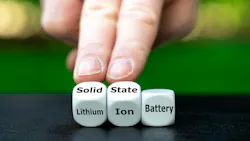
Solid-state batteries (SSBs) aim to improve electric-vehicle (EV) safety (reducing fire risks), extend range, and increase charging speed by replacing the liquid electrolytes in a typical battery cell. They utilize a solid electrolyte instead of the liquid or gel electrolytes found in traditional lithium-ion batteries.
CATL (Contemporary Amperex Technology Co. Ltd.) is targeting small-scale production of SSBs by 2027. Pilot production has already begun with energy densities having achieved a reported 500 Wh/kg, potentially allowing for 1,000+ km EV range. The domestic name of the battery is Ningde Shidai All-Solid-State.
A newly published international patent, PCT/CN2025/086345, titled “Positive Electrode Sheet, Solid-State Battery Cell, Battery Device, Electric Device, and Positive Electrode Active Material and Preparation Method Therefore,” was disclosed by the World Intellectual Property Organization (WIPO) on March 5. In 2025, CATL filed 311 international patents alone, 37% more than the previous year.
Fluorine is Key to Sulfide Stability
As highlighted in the patent, CATL developed a positive electrode plate that uses a fluorine-containing lithium salt and sulfide solid-state electrolyte materials. The result is said to have good high-temperature stability. The sulfide electrolyte material can be decomposed to generate lithium fluoride (LiF), used to create the solid-electrolyte layer.
The new patent also details its preparation method. This patent underlines CATL’s strategy to tackle the engineering challenges of solid-state batteries — specifically sulfide instability.
The filing describes cathodes using lithium salts containing fluorine and sulfide solid electrolytes to boost stability. Fluorine-based lithium salts have stable characteristics even at high temperatures. The solid electrolyte layer acts as a protective film inside the battery, again boosting stability, helping extend battery life, and improving charging speed.
The patent also outlines a cathode sheet, solid-state battery cell manufacturing methods, and operating methods to secure both stability and performance.
What’s an Argyrodite-Type Electrolyte?
The patent specifically addresses the stability of Argyrodite-type electrolytes, aiming to improve the overall performance and stability of the solid-state cell. The Argyrodite-type is said to be a scalable, cost-effective alternative to high-cost oxide electrolytes.
These solid-state electrolytes designed for high-performance lithium-ion batteries are reported to offer superior ionic conductivity at room temperature, excellent electrochemical stability, and a mechanical softness said to be favorable for interfacial contact. Unlike liquid-electrolyte batteries, sulfide solid-state stacks demand constant compression to maintain interfacial contact because they lack the ability to self-heal interfaces.
60-Ah SSBs by Decade’s End, But Not a 2,000-km Version
This patent is part of CATL's development strategy targeting the deployment of 60-Ah solid-state battery prototypes ahead of mass production, which is expected closer to the end of the decade.
CATL has denied rumors of a solid-state battery capable of taking EVs 2,000 km by 2027, noting that commercialization of solid-state batteries for EVs is still some distance away. While focused on automotive-grade solid-state batteries, CATL anticipates first achieving small-scale production by 2027.
China is the first country to propose a national standard for solid-state EV batteries. The draft of “Solid-state batteries for electric vehicles, Part 1: Terminology and Classification” was completed in December 2025. It’s release as a standard is anticipated for July 2026. The standard is expected to provide criteria that distinguish between liquid batteries, semi-solid batterie,s and solid-state batteries.
While solid-state EV batteries promise significantly higher energy density, longer driving range, and faster charging (even in extreme temperatures), engineering hurdles remain, cost being chief among them. Sulfide solid-state cells are currently 3X to 5X more expensive than conventional lithium-ion designs.
CATL has characterized its efforts for now as aiming at early deployments in drones and robotics, where energy density is more important than mass-market cost parity. Earlier, CATL estimated that mass production for large-scale applications would begin in 2030.
In the meantime, sodium-ion, LFP, and other battery chemistries may enable more affordable, more efficient, and more sustainable options.
About the Author
Murray Slovick
Contributing Editor
Comment About the Article
To join the conversation, and become an exclusive member of Electronic Design, create an account today!
 Leaders Logo
Leaders relevant to this article: