
Ask the Expert: Faster Charging is Achievable through Multiphysics Simulation
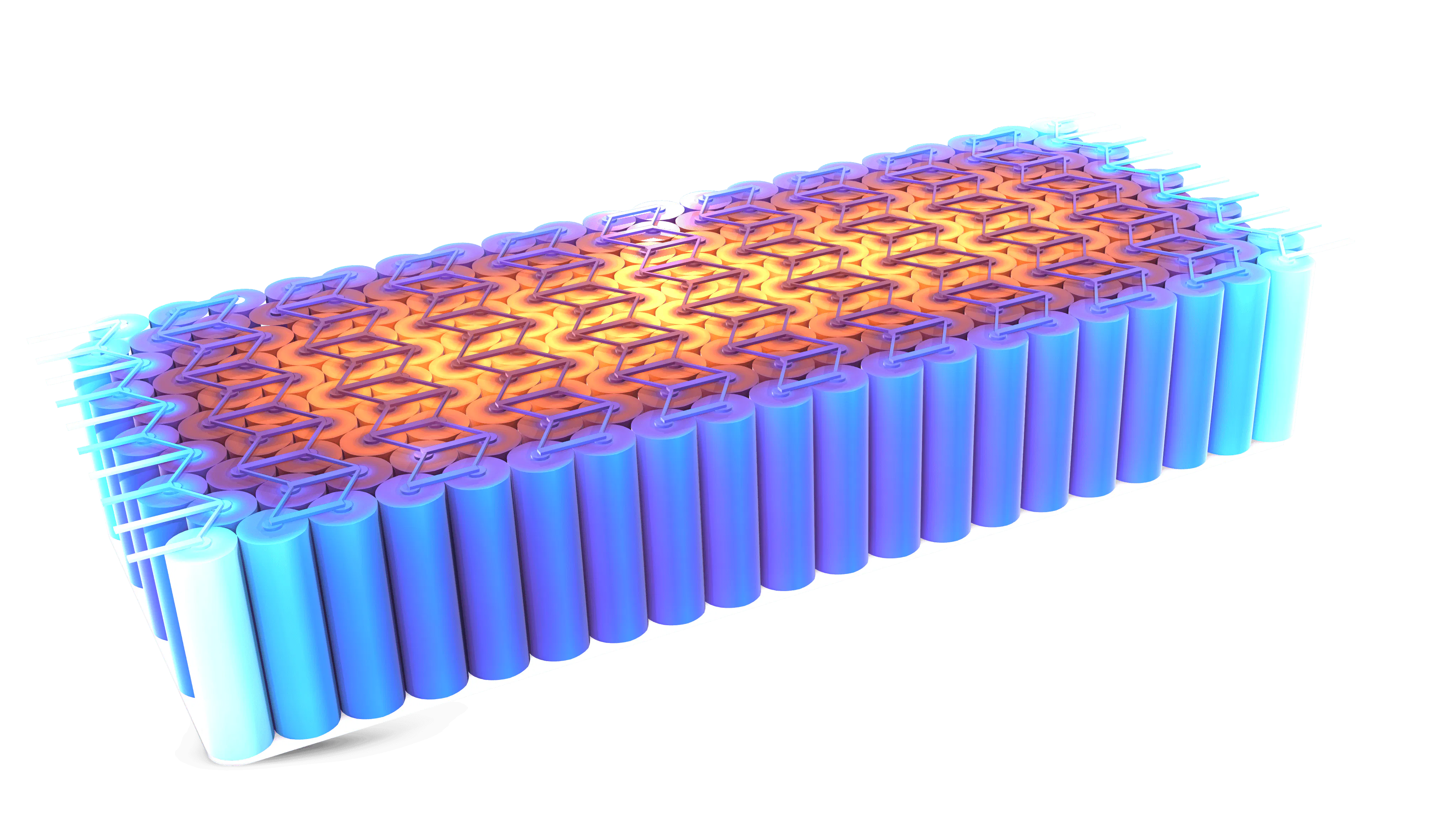
EV battery fast charging is essential to making electric vehicles more competitive, but charging speed is constrained by battery degradation. This, in turn, is caused by complex interactions among battery chemistry, design, operating conditions, and battery management system (BMS) behavior. Multiphysics simulation provides a powerful solution for modeling the coupled electrical, thermal, mechanical, and electrochemical processes that govern battery performance.
At the cell level, simulation illuminates how factors such as temperature, charge rates, and operating conditions influence degradation mechanisms, including lithium plating dendrite formation and solid electrolyte interphase (SEI) formation. Advanced simulation can even analyze electrode structures at the particle scale, providing insights that were previously available only through costly teardown and post-mortem analysis.
At the battery-pack level, multiphysics simulation helps optimize cell placement, cooling systems, and EV battery thermal management strategies. It reveals how uneven temperatures and cell-to-cell variations can accelerate aging, reduce performance, and create safety risks.
Beyond improving battery design, multiphysics simulation supports the development of more sophisticated BMS algorithms and optimized fast-charging profiles that reduce charging times while preserving battery life. By serving as a virtual prototype, it allows engineers to evaluate hundreds of design alternatives quickly, reducing development costs, shortening design cycles, and enabling innovation. Ultimately, it helps create batteries that are safer, more reliable, longer-lasting, and better suited for future EV applications.