Transient Electronics: Devices that Degrade and Disappear
What you'll learn:
- The important materials making transient electronics a reality.
- The current challenges of transient electronics.
- How transient electronics could tackle e-waste.
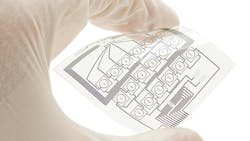
Electronics have long been defined by their permanence. Even when their useful life ends, their materials persist in landfills for years or decades. Transient electronics embrace impermanence with devices that are deliberately engineered to function for a set period of time and then disappear, dissolving into safe byproducts when exposed to water, heat, or light.
Advances in electronics technology moving at a faster pace than ever before, and, thus, older electronics become obsolete or undesirable quickly. While there are obvious benefits to developments in electronic technology, the fast turnover of electronics sends millions of devices to landfill every year. With global e-waste projected to increase to 82 million metric tons by 2030, researchers seek alternatives that are more sustainable in the long term.
Transient electronics could help usher in a more circular economy for new gadgets while advancing our technological capabilities with new electronics applications.
The Materials Behind Transient Electronics
The foundation of transient electronics lies in materials science. Designing a successful transient electronic system is a balance between reliable performance and controlled degradation. There have been advances in several different categories of materials, including semiconductors, substrates, and encapsulation materials that, in some cases, can even bend or flex into different form factors.
Semiconductors
Molybdenum disulfide (MoS2), graphene, and black phosphorus are emerging for their electronic and optoelectronic properties. MoS2 offers high carrier mobility and can degrade under environmental triggers, making it attractive for transient semiconductors. These provide excellent electronic performance while being thin enough to degrade relatively quickly under environmental conditions. For MoS₂, exposure to UV or visible light can promote oxidation, accelerating the dissolution.
Even traditional semiconductor materials like silicon can be engineered to dissolve when fabricated in ultra-thin layers or nanomembrane form. Unlike bulk silicon, which is chemically stable and essentially permanent, silicon nanomembranes undergo hydrolysis in aqueous or biofluids, gradually converting into harmless silicic acid, a compound that’s safely absorbed or excreted by the body.
Having such a property makes degradable silicon not only biocompatible but also fully bioresorbable, opening the door to medical implants and temporary sensors that leave no trace behind.
Substrates and Encapsulation Materials
Polymers like poly(lactic-co-glycolic acid) (PLGA) and polycaprolactone (PCL) are already established in biomedical contexts for their predictable hydrolytic breakdown. By adjusting crystallinity, molecular weight, or blending with other polymers, degradation rates can be tailored to longer devices lifetimes. Heat and humidity accelerate this process, which are important environmental factors to consider while also being useful tools in the degradation design.
>>Check out this TechXchange for similar articles and videos
 Green printed circuit board morphing into trees
Silk proteins could be another important structural material for transient electronics. Films of silk fibroin are biocompatible, water-soluble under certain conditions, and mechanically tunable. Silk proteins can serve as flexible substrates, encapsulation layers, or even as dielectrics. Advances in processing techniques make it possible to fine-tune dissolution rates by changing crystallinity or annealing conditions.
Transient Electronics: A Balancing Act Between Performance and Impermanence
For each material, these triggers can be engineered to respond within specific timeframes, making transient devices customizable for short- or long-term applications. This flexibility is central to their promise, but it also underscores the complexity of their design. With these devices still in active development, success depends on carefully balancing multiple, often competing factors:
- Tradeoff between stability and transience: The main engineering challenge is achieving high-performance operation, including conductivity, mobility, and stability, while ensuring predictable, complete degradation. Materials must withstand operational environments long enough to function, but not so long that they persist beyond their intended use. For semiconductors, the electrical characteristics of these materials are tested with precision tools, which allow researchers to record parameters such as current–voltage behavior and carrier mobility before degradation begins.
- Uniformity of degradation: Ensuring that devices dissolve consistently rather than fragment unpredictably. Controlled degradation depends on fine-tuning material properties and environmental parameters. Getting this right is particularly important for medical implants or environmental sensors, where leftover materials could pose biological or ecological concerns.
- Integration of multiple materials: Different degradation rates of polymers, metals, and 2D materials can complicate overall device performance and lifetime predictability. This could cause devices to lose function before their intended lifetime or dissolve in an uncontrolled sequence, making it difficult to design predictable operating windows.
- Scalability and cost: Producing transient devices at industrial scale while maintaining tunable properties is still a significant hurdle. Many demonstrations to date rely on complex fabrication steps or materials that are not yet optimized for mass production. Achieving uniform thickness in nanomembranes, precise control of polymer crystallinity, or consistent integration of degradable metals and 2D materials can be both time-consuming and expensive at scale. At the same time, transient electronics must remain cost-competitive with conventional devices to encourage adoption.
The Possibilities for Less-Permanent Electronic Devices
Impermanence offers possibilities that permanent electronics cannot. In medicine, biodegradable implants are already proving their worth. Biodegradable implants such as temporary pacemakers have already been demonstrated as a way to provide life-saving support to newborns and adults with heart defects before dissolving, eliminating the need for secondary surgeries that add risk.
Similar approaches are being developed for post-surgical monitoring and drug delivery, where transient electronics can record recovery data or release therapies and then disappear without intervention.
Outside of healthcare, degradable sensors are emerging to support sustainable agriculture, improving crop yields while composting harmlessly after use. Transient sensors also show promise for environmental monitoring and data collection in extreme or inaccessible locations, where retrieval is impossible.
Beyond new applications, transient electronics could be integrated into consumer technologies to tackle the mounting e-waste crisis. Electronics sent to landfills won’t break down because of the materials they’re made of. Instead, some can leach toxic chemicals into the environment.
Electronics recycling has become more popular, but e-waste is still rising 5X faster than documented recycling, revealing a system unable to keep pace with the sheer volume of discarded devices. Transient electronics offer a way to ease this burden, reducing the volume that must be collected, processed, and recovered by recycling infrastructure.
Currently, most transient devices are designed for relatively short operational lifetimes, which limits their role in consumer technology. For a chance to become part of the e-waste solution, these electronics will need to last longer while maintaining precise, controllable degradation. After all, no one wants their phone’s circuitry to vanish halfway through a call.
Even with this hurdle, the future of electronics could look completely different with commercialized transient electronics radically reshaping our understanding of technology lifecycles. Though these devices would not curb society’s appetite for new gadgets, by ensuring that the material legacy of those products disappears, the environmental cost of our collective tech obsession could be dramatically reduced.
>>Check out this TechXchange for similar articles and videos
Green printed circuit board morphing into treesAbout the Author
Imogen Pass
Scientific Content Collaborator, Ossila
Imogen Pass writes technical content with the knowledge and help of Ossila’s industry experts. Ossila specializes in lab equipment and materials that are used to fabricate and test research devices, driving the development of small-scale and flexible electronics, higher efficiency solar panels, battery technologies, and more.
Comment About the Article
To join the conversation, and become an exclusive member of Electronic Design, create an account today!
 Leaders Logo
Leaders relevant to this article: