Raspberry Pi for the Professional Engineer
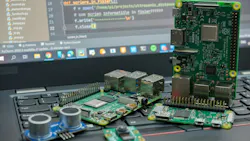
Raspberry Pi has entered the pantheon of industry product standards, where all competitors are referred to as clones; iPhone and Arduino are good company for our SBC champ. I wouldn’t say this was caused by the low introductory price of the Raspberry Pi (R-Pi), or its lack of strong competitors. Rather, it was the quality and robustness out of the box.
R-Pi was originally conceived as a way to boost interest in programming for school children back in 2008, with the creation of The Raspberry Pi Foundation. That low price, $35 USD, announced along with prototype images, had people foaming at the mouth to get it way before it was ready. I remember seeing some news about it in 2009, and I was feeling that same urgency.
Everything you need to run a system in an ultra-compact — for the time — package outputting 1080p natively had everyone’s imagination running wild.
When it launched, I got my hands on the first commercial production boards. If you look at these projects, I used that first-generation R-Pi to make some of them happen. The first one in that list, for sure. I noticed that a R-Pi has shown up in six of my cartoons. The board had a big impact on me, obviously.
I’m not the only one. Countless people and companies took interest in the board. Every generation faced a sellout periodically in their lifespans. The R-Pi has gone professional, too; in particular, the R-Pi Compute series. You’ll find R-Pi boards inside end products. I’ve seen them used in test labs, prototyping, and final products in a professional setting.
Very much like Arduino, Raspberry Pi is a professional platform. Don’t be dissuaded by its humble beginnings.
Over this week, I will be dropping stories about Raspberry Pi that will help you evaluate the platform. Keep checking back all week.
Check out the rest of Electronic Design Weekly
 EDW TechXchange
>>Check out this TechXchange for similarly themed articles and videos
About the Author
 Cabe Atwell
Cabe Atwell
Technology Editor, Electronic Design
Cabe is a Technology Editor for Electronic Design.
Engineer, Machinist, Cartoonist, Maker, Writer. A graduate Electrical Engineer actively plying his expertise in the industry and at his company, Gunhead. When not designing/building, he creates a steady torrent of projects and content in the media world. Many of his projects and articles are online at element14 & SolidSmack, industry-focused work at EETimes & EDN, and offbeat articles at Make Magazine. Currently, you can find him hosting webinars and contributing to Electronic Design and Machine Design.
Cabe is an electrical engineer, design consultant and author with 25 years’ experience. His most recent book is “Essential 555 IC: Design, Configure, and Create Clever Circuits”
Cabe writes the Engineering Life & Engineering on Friday blog on Electronic Design.
See Cabe's cartoons & comic strips here.
Comment About the Article
To join the conversation, and become an exclusive member of Electronic Design, create an account today!
 Leaders Logo
Leaders relevant to this article: