AMD Reengineers its Ryzen 7 5800X3D Gaming Processor

AMD released its groundbreaking Ryzen 7 5800X3D Gaming Processor back in 2022, where it took the silicon crown from Intel in terms of performance and cost. The company has since reengineered and re-released the Ryzen 5800X3D to combat the high cost of processors we have to deal with today.
While that’s not exactly newsworthy, how they managed to accomplish that feat certainly is, as the technology wasn’t designed for it. Before we get into how they accomplished that process, let’s look at how the original was engineered.
The original Ryzen 5800X3D used the same 7-nm process and Zen 3 architecture as the 5000 series that was launched in 2020. However, the engineers used a special hybrid bonding technology to fuse an extra slice of cache atop the processing cores. Hence, the 3D part of the name.
The original Ryzen 7 5800X3D featured AMD’s 3D V-Cache, which leverages a hybrid bonding technique to fuse an additional 64 MB of 7-nm SRAM cache vertically atop the Ryzen compute cores. It tripled the amount of L3 cache per die.
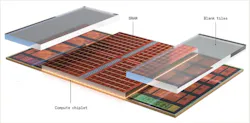
The original processor is an eight-core, 16-thread Zen 3 processor that used the same basic architecture as the Ryzen 7 5800X, with the only difference being the addition of 3D V-Cache. Instead of increasing the processor's clock speeds for increased performance or adding more CPU cores, AMD stacked an additional 64 MB of SRAM cache directly on top of the existing 32-MB L3 cache. That cache isn’t placed beside the CPU die. Rather, it’s bonded to it using TSMC's 3D chip-stacking technology that creates dense vertical interconnects.
That’s just a brief overview of how AMD’s bonding technique created the Ryzen 5800X3D. Otherwise, it isn’t different from the 5800X. But it helps explain what the company did for the 10th Anniversary Edition released just a few months ago.
The specs for the new Ryzen 5800X3D haven’t changed. It still features eight Zen 3 cores, 16 threads, a maximum 4.5-GHz boost clock, 96 MB of combined L2 and L3 cache, and a 105-W TDP. The difference between them is how they’re manufactured, as the original TSMC stacking process has changed since AMD released the original chip.
The original first-generation manufacturing process went offline, meaning AMD couldn’t simply fire up production using the original recipe. Instead, the engineers had to reengineer the 5800X3D so that they could work with the second-generation cache-stacking process used by newer generations of the X3D processors still being manufactured.
The new 10th Anniversary Edition uses a second-gen stacking process that AMD adopted for later X3D processors. AMD stated the newer process changed the characteristics of how the two pieces of silicon are bonded and stacked.
It also meant that AMD couldn't simply take the old Zen 3 design and run it through the new process. They had to determine if they could use the older cache configuration and find out if it could physically work with the new bonding process, then requalify the new 5800X3D chip.
David McAfee, VP and GM of AMD’s Radeon and Ryzen divisions, explained in a recent interview on Tom’s Hardware how the Ryzen 7 5800X3D made its comeback: “The original stacking process that was used at TSMC changed when we went from first-gen to second-gen cache, so we had to reengineer that product, and there actually was a fair amount of development that went into bringing back the 5800X3D.”
He went on to say that it completely changed the characteristics of how those two pieces of silicon are bonded together and how they were stacked together.
What makes the Ryzen 7 5800X3D 10th Anniversary Edition noteworthy isn’t that AMD brought back an old processor. What stands out is the company had to reengineer it to work with a newer manufacturing process that didn’t exist when the original chip was manufactured.
Nonetheless, AMD managed to keep the same Zen 3 architecture, 96 MB of L3 cache, and AM4 compatibility while adapting the processor to a newer generation of 3D V-Cache technology. It puts into perspective just how semiconductor manufacturing continues to evolve, and how much engineering goes into breathing new life into old designs.
About the Author
 Cabe Atwell
Cabe Atwell
Technology Editor, Electronic Design
Cabe is a Technology Editor for Electronic Design.
Engineer, Machinist, Cartoonist, Maker, Writer. A graduate Electrical Engineer actively plying his expertise in the industry and at his company, Gunhead. When not designing/building, he creates a steady torrent of projects and content in the media world. Many of his projects and articles are online at element14 & SolidSmack, industry-focused work at EETimes & EDN, and offbeat articles at Make Magazine. Currently, you can find him hosting webinars and contributing to Electronic Design and Machine Design.
Cabe is an electrical engineer, design consultant and author with 25 years’ experience. His most recent book is “Essential 555 IC: Design, Configure, and Create Clever Circuits”
Cabe writes the Engineering Life & Engineering on Friday blog on Electronic Design.
See Cabe's cartoons & comic strips here.
Comment About the Article
To join the conversation, and become an exclusive member of Electronic Design, create an account today!
 Leaders Logo
Leaders relevant to this article: