Is Neuromorphic Computing the Way for AI?
What you'll learn:
- The issues in deploying AI-based solutions today.
- How neuromorphic computing is bringing ultra-low-power intelligence to real-world sensing applications.




Currently, AI and edge computing are hitting a wall when it comes to power budgets, latency, and cloud dependence, hindering real-world deployments. This issue is complicated by the need to integrate a great deal of input from sensors and other devices.
Sensors capture rich signals, but current logic solutions have trouble keeping up efficiently. Neuromorphic computing helps address this bottleneck, providing brain-inspired, event-driven intelligence for enhanced sensor integration.
A spiking neural network’s (SNN) extremely low-power operation allows for sensor data processing in microwatt and nanowatt ranges, with real-time responsiveness and inherently low processing latency. It also enables privacy by design through on-device data processing, with compact and scalable architectures optimized for embedded systems. Neuromorphic computing offers robust, adaptive performance resilient to noise and sparse signal activity.
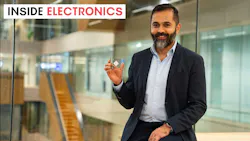
Innatera’s Spiking Neural Processor architecture operates with significantly lower energy than conventional edge AI, leading the way to truly always-on sensing in devices. In this podcast, we talk to Sumeet Kumar, Co-founder & CEO of Innatera, about the state of the AI industry and the company’s SNN technology.
SHOW NOTES
00:57 – Explosion of Edge AI
01:51 – What’s Wrong with the GPU Approach to AI
05:13 – Spiked Neural Networking & Neuromorphic Compute
08:15 – What's the Difference in SNNs & GPUs?
11:47 – Neuromorphic Microcontrollers
14:41 – Applications for Neuropmorphic MCUs
About the Author
 Alix Paultre
Alix Paultre
Editor-at-Large, Electronic Design
An Army veteran, Alix Paultre was a signals intelligence soldier on the East/West German border in the early ‘80s, and eventually wound up helping launch and run a publication on consumer electronics for the US military stationed in Europe. Alix first began in this industry in 1998 at Electronic Products magazine, and since then has worked for a variety of publications in the embedded electronic engineering space. Alix currently lives in Wiesbaden, Germany.
Also check out his YouTube watch-collecting channel, Talking Timepieces.
Sumeet Kumar
Co-Founder and CEO, Innatera Nanosystems
Sumeet Kumar is Co-Founder and CEO of Innatera Nanosystems, a semiconductor startup that aims to simplify sensor data analytics in power constrained devices.
Comment About the Article
To join the conversation, and become an exclusive member of Electronic Design, create an account today!
 Leaders Logo
Leaders relevant to this article: