6 New Battery Innovations Divulged at CATL “Super Technology” Day
What you'll learn:
- Features of the multiple battery innovations, from the third-generation Shenxing Superfast Charging Battery to the Naxtra Sodium-ion Battery.
- Introduction of an integrated supercharging and battery-swapping network.
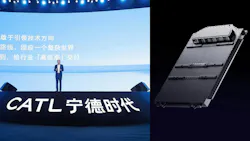
A major trend within the lithium-ion battery industry is the pursuit of coordinated development across multiple chemical systems. Evidence of this was on display at CATL’s (Contemporary Amperex Technology Co., Limited) recent “Super Technology Day” in Beijing, China.
The company unveiled two third-generation batteries (the Shenxing Superfast Charging Battery and the Qilin Condensed Battery), its second-generation Freevoy Super Hybrid Battery, as well as its Naxtra Sodium-ion Battery and a fully integrated supercharging and battery-swapping solution.
At the event, Dr. Wu Kai, Chief Scientist of CATL and an academician of the Chinese Academy of Engineering noted that lithium iron phosphate (LFP) is nearing its theoretical energy density limit, making it better suited for a technology roadmap centered on extremely fast charging to achieve what he termed ”optimal balance.”
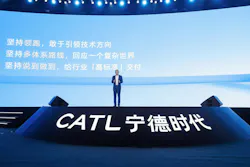
Sodium-ion batteries offer broad potential for extreme temperatures and energy storage applications. Wu Kai further declared in his speech that the company has resolved core manufacturing challenges for sodium-ion batteries, with large-scale production set for Q4 2026 (Fig. 1).
Fast Charging and Long Lifespan No Longer a Tradeoff
From an electrochemical standpoint, boosting charge rates while protecting battery lifespan hinges on temperature rise, not trickle current. A 10°C increase in battery temperature can roughly double the rate of internal side reactions — an effect that can significantly shorten lifecycle.
The third-generation Shenxing Superfast Charging Battery addresses heat generation and dissipation through three major measures:
- Reduced heat production during operation
- Stronger thermal propagation
- Higher precision control
As a result, after 1,000 complete cycles, the battery's capacity retention is said to remain above 90%, achieving an optimal balance between fast charging and long service life.
The third-generation Shenxing Superfast Charging Battery has reached what’s claimed to be the industry's strongest charging capability: an equivalent 10C and a peak 15C charging rate (a 10C battery charging rate means a battery can be fully charged in 6 minutes, or 1/10th of an hour) (Fig. 2).
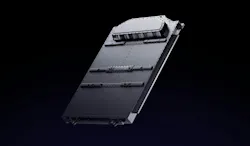
Charging from 10% to 35% SOC (state of charge) takes just 1 minute; from 10% to 80% SOC takes 3 minutes and 44 seconds; and from 10% to 98% SOC takes 6 minutes and 27 seconds, according to CATL. Even at −30°C in extreme cold conditions, charging from 20% to 98% SOC is said to take about 9 minutes.
Third-Gen Qilin Battery: Lighter and Stronger
Historically, achieving long range in premium EVs with LFP batteries has relied on simply adding more capacity. It’s an approach that inevitably compromises vehicle weight.
The third-generation Qilin Condensed Battery is designed for premium long-range EVs. It achieves a cell energy density of 280 Wh/kg and enables 1,000-km range while supporting 10C superfast charging, according to CATL.
The battery delivers 3-MW peak power, more than doubling the output of the second-generation Qilin track battery that competed on the Nürburgring.
The entire battery pack weighs 625 kg. CATL said that compared with equivalent LFP systems, this represents a weight reduction of 255 kg and space savings of 112 liters.
Energy consumption per 100 km is said to decrease by more than 6%, saving approximately 0.78 kWh per 100 km. Across a fleet of one million vehicles travelling 20,000 km annually, this equates to 156 million kWh in electricity savings and a reduction of 78,500 tons of CO2 emissions, again according to the company.
Chassis component life is claimed to be extended by 40% and tire life by over 30%, increasing replacement intervals by at least 10,000 km. The 112 liters of space saved can increase cabin headroom by at least 18 mm.
Aviation-Grade Technology Applied to Passenger Vehicles
The Qilin Condensed Battery applies aviation-grade technology to passenger vehicles for the first time, achieving 350 Wh/kg cell energy density and 760 Wh/L volumetric energy density. CATL claims it’s a new record for mass-produced batteries. This leads to 1,500-km range for sedans and over 1,000 km for large SUVs, with battery pack weight controlled within 650 kg.
The condensed battery features a high-nickel cathode and low-expansion silicon-carbon anode, boosting energy density by 50 Wh/kg. Its aviation-grade titanium alloy case reduces thickness by 60% and weight by 30%, while tripling unit strength and delivering an additional 20 Wh/kg in energy density.
The technology builds on CATL's electric aviation program, where 500-Wh/kg systems have completed maiden flight validation on four-ton aircraft, with further validation underway on aircraft exceeding eight tons.
Replacing liquid electrolyte with a condensed system eliminates risks associated with leakage and combustion, achieving the goal of ‘’no liquid to leak, no liquid to ignite." At the same time, CATL has adopted a new composite current collector that acts as a fast fuse in extreme cases of internal short circuits.
Bringing Hybrids into the 600-km Pure Electric Era
According to CATL, the second-generation Freevoy Super Hybrid Battery extends all-electric range to up to 600 km and standardizes 10C charging. It pioneers what the company calls a "super hybrid technology" that integrates LFP and nickel-cobalt-manganese (NCM) batteries, a leading lithium-ion technology) materials through gradient-uniform mixing. The olivine crystal structure of LFP serves as the core backbone, enabling a uniform hybrid of LFP and NCM materials at the powder particle level.
It’s said to achieve an energy density of 230 Wh/kg. It also increases range by over 15% without elevating pack weight, compared with single LFP systems.
The LFP version delivers up to 500-km pure electric range, enabling a "once-a-week charging" experience for daily commuting. The NCM version further extends pure electric range beyond 600 km, with total vehicle range exceeding 2,000 km. This allows for a dual-use experience for both daily electric driving and long-distance travel (all stats courtesy of CATL).
The system delivers 1.5 MW of power at full charge and maintains 1.2 MW at 20% SOC, addressing power degradation in low-charge conditions. In off-road scenarios requiring over 350-kW output, the system is said to provide more than 3X the required power, ensuring consistent performance even at low charge levels.
Safety features include a reinforced bottom coating capable of withstanding 1,500 joules of impact energy (10X the Chinese national standard) and waterproof sealing that allows continuous immersion in two meters of water for over 200 hours without performance degradation.
Achieving GWh-Scale Sodium-Ion Industrialization
The Naxtra Sodium-ion Battery marks CATL's transition from laboratory project to large-scale manufacturing. By systematically overcoming engineering challenges, CATL has achieved GWh-level industrialization. On February 5 of this year, the world’s first mass-produced sodium-battery passenger vehicle — a joint creation of Changan Automobile and CATL — was unveiled.
In 2026, CATL successfully addressed four key industry bottlenecks for sodium-ion mass production—extreme water control, gas generation in hard carbon, aluminum foil adhesion, and self-forming anode systems — paving the way for reliable, large-scale deployment. The Naxtra Sodium-ion Battery is set to enter full-scale mass production by the end of 2026.
Integrating Supercharging and the Battery-Swapping Network
CATL also introduced an integrated supercharging and battery-swapping network, designed as a unified system rather than separate solutions. All passenger vehicle "Choco-Swap" and heavy truck "QIJI" swapping stations will be equipped with Shenxing supercharging systems, enabling true charge–swap synergy. Each station will serve as both a battery-swapping node and a high-power charging hub.
The integrated charge–swap stations feature shared compact substations and charging modules. They reduce energy-conversion steps and lower overall power loss by more than 13 percentage points compared with conventional storage-equipped charging stations, according to CATL.
In emergency scenarios, station batteries can discharge directly to charging piles, driving equipment utilization rate above 85%. This enables a service capacity of 3X per parking space compared with conventional storage-equipped charging stations, while the fixed investment cost of the supercharging segment is reduced to only one-fifth of comparable systems.
CATL’s Choco-Swap #26 battery features an 800-V high-voltage architecture. The first release includes a 75-kWh version, with higher-capacity variants to follow, fully compatible with B- to C-segment 800-V vehicles. With this launch, the Choco-Swap system will extend its coverage to a complete vehicle matrix.
In terms of network deployment, CATL plans to build 4,000 integrated charge–swap stations by the end of 2026, covering nearly 190 cities and a nationwide highway network spanning 12 vertical and 11 horizontal corridors. To date, the Choco-Swap network has already built 1,470 stations across 99 cities, with scaling continuing to accelerate.
Together with automakers and energy partners, CATL will co-develop a "charge–swap sharing network" based on technology sharing, seamless connectivity, and joint investment. Initial partners include BAIC,Changan, Chery, GAC, SAIC-GM-Wuling, and Seres, with a target of building over 100,000 shared energy replenishment facilities by the end of 2028.
About the Author
Murray Slovick
Contributing Editor
Comment About the Article
To join the conversation, and become an exclusive member of Electronic Design, create an account today!
 Leaders Logo
Leaders relevant to this article: