Silanna Delivers Industry’s Smallest Laser Firing System ICs

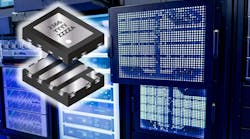
FirePower laser firing system ICs for smaller, more efficient LiDAR and rangefinder applications are now available in production quantities. Developed by Silanna Semiconductor, these devices significantly reduce power consumption, system size, BOM cost, and design complexity versus other laser driver technologies.
The SL2001 and SL2002 are the first laser firing system ICs to combine resonant capacitor charging and high-current laser diode firing on a single device. This eliminates multiple external discrete components and inefficient conversion phases, ultimately reducing a laser system's footprint by 80% (from 400 mm2 to 80 mm2).
Both ICs are housed in a 14-pin, 3.5-mm2 package. They offer a VIN to resonant capacitor charging efficiency of up to 85% and can be used with both EELs (edge-emitting lasers) and VCSELs (vertical-cavity surface-emitting lasers).
The SL2001 was created for automotive-grade LiDAR and delivers sub-2-ns full-width-at-half-maximum (FWHM) laser pulses as well as a peak power output of 1,000 W when running from a 3- to 24-V supply. The SL2002 is designed for handheld and battery-operated systems using a 2.8- to 5.5-V supply to deliver a 100-W pulse with a 1-MHz pulse repetition frequency.
FirePower specification sheets and further information on the SL2001 and SL2002 laser driver ICs are available from the Silanna FirePower homepage linked above, or at the following links:
Next in This Edition of PowerBites

 dreamstime_davidebonaldo_444289282_promo
More PowerBites

 powerbites_promo
About the Author
 Lee Goldberg
Lee Goldberg
Contributing Editor
Lee is the author of the popular PowerBites series.
Lee Goldberg is a self-identified “Recovering Engineer,” Maker/Hacker, Green-Tech Maven, Aviator, Gadfly, and Geek Dad. He spent the first 18 years of his career helping design microprocessors, embedded systems, renewable energy applications, and the occasional interplanetary spacecraft. After trading his ‘scope and soldering iron for a keyboard and a second career as a tech journalist, he’s spent the next two decades at several print and online engineering publications.
Lee’s current focus is power electronics, especially the technologies involved with energy efficiency, energy management, and renewable energy. This dovetails with his coverage of sustainable technologies and various environmental and social issues within the engineering community that he began in 1996. Lee also covers 3D printers, open-source hardware, and other Maker/Hacker technologies.
Lee holds a BSEE in Electrical Engineering from Thomas Edison College, and participated in a colloquium on technology, society, and the environment at Goddard College’s Institute for Social Ecology. His book, “Green Electronics/Green Bottom Line - A Commonsense Guide To Environmentally Responsible Engineering and Management,” was published by Newnes Press.
Lee, his wife Catherine, and his daughter Anwyn currently reside in the outskirts of Princeton N.J., where they masquerade as a typical suburban family.