Is Soldering Your Own RAM Worth It in Today's Economy?
What you'll learn:
- Why memory prices have gotten so absurd that people are experimenting with assembling their own DDR5 modules.
- What's involved, from sourcing parts to soldering and flashing firmware, and whether it's truly cheaper.
- Alternatives and real-world options for upgraders stuck in the RAM crunch without resorting to micro-soldering.
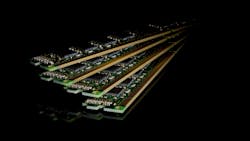
It’s like something out of the earliest days of home computer.
RAM prices in 2026 have skyrocketed. High-capacity DDR5 kits, including 32 GB or 64 GB, can cost more than a mid-range GPU. And outrageously high prices on larger kits (128 GB and above) have pushed some builders into ludicrous territory. As a result, an interesting trend has emerged: Some hardware enthusiasts are literally building their own memory modules by taking memory chips off one board and soldering them onto another.
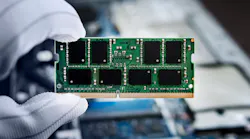
The idea isn't just speculation anymore. A Russian modder known as "VIK-on" took two DDR5 laptop memory sticks, harvested the memory chips, and soldered them onto a blank desktop DDR5 PCB he ordered from China. He added a heatsink, flashed some firmware, and ended up with a working 32-GB desktop RAM module that runs at 6,400 MT/s with XMP support.
Total parts cost was around $218, roughly $130 less than a comparable retail stick right now. That build was reported to run comparable to retail hardware when installed and detected by a typical BIOS.
This gives you an idea of how desperate or creative some people are getting amidst high memory prices. Some even suggest that in Russia, the savings on a single 32-GB dual-inline memory module (DIMM) could be on the order of $600 to $800 compared to local retail costs.
Realities of Soldering Memory onto a PCB
While that may sound like an easy hack — buy cheap parts and build big memory kits yourself —several hard realities lie under the surface.
First, sourcing the parts needed can be difficult and expensive. Blank DDR5 PCBs are easy to find for just a handful of dollars, but the memory chips themselves are the real bottleneck. Manufacturers have cut back on consumer production and prioritize higher-value segments such as AI servers and enterprise gear, leaving supply constrained.
Even though a DIY build might cost less in some cases, it's not as simple as buying chips off eBay and magically getting big RAM for cheap. Part availability and pricing vary wildly and can easily eat into any savings.
Second, this isn’t beginner soldering. Memory chips are ball-grid-array (BGA) components with tiny, densely packed connections. To transplant them successfully, you need a BGA rework station or a reflow oven, fine-pitch solder paste and stencils, and a level of micro-soldering skill that even some seasoned builders don't have. Without the right tools and steady hands, there's a good chance the module will never work or it will fail unpredictably.
Third, once the physical board is assembled, users still need to program the SPD and XMP firmware correctly, so that the system recognizes the module and runs at nominal speeds. Such a process typically involves extracting firmware from an existing retail kit and flashing it onto the DIY memory, adding another layer of complexity most people haven't tackled before.
Realities of Going Massive
Can this method scale up to a massive 256-GB kit? Theoretically, yes, but in practice, users need to repeat this process multiple times, find enough high-capacity chips, and overcome all of the same tool, skill, and firmware challenges that come with it. The small-module example, even the one that saved a noticeable amount, involved a project that many builders described as borderline lab-level work rather than a weekend hobby mod.
More importantly, the current RAM ecosystem highlights how extreme the memory market has become. When DIY RAM builds start spreading on tech forums and getting coverage from hardware sites, that says something about how painful the retail landscape is for average builders.
Some people have even explored alternatives like using SO-DIMM to UDIMM adapters to repurpose laptop memory in desktops without soldering. Or they turn to older generations like DDR4, where the per-GB cost can still be lower.
When it comes down to it, soldering your own RAM can save money, but only under very specific circumstances. And while it's technically impressive, it's not for most of the DIY crowd. It's not a practical path for the majority of builders who need stable, supported memory for their systems. The skills, equipment, parts sourcing difficulties, and risk of failure make it an enthusiast hobby, not a mainstream cost-saving alternative — at least not yet.
I suspect a small cottage industry will erupt over this RAM issue. How long until memory-chip manufacturers get wind and hike prices of the raw components?
About the Author
 Cabe Atwell
Cabe Atwell
Technology Editor, Electronic Design
Cabe is a Technology Editor for Electronic Design.
Engineer, Machinist, Cartoonist, Maker, Writer. A graduate Electrical Engineer actively plying his expertise in the industry and at his company, Gunhead. When not designing/building, he creates a steady torrent of projects and content in the media world. Many of his projects and articles are online at element14 & SolidSmack, industry-focused work at EETimes & EDN, and offbeat articles at Make Magazine. Currently, you can find him hosting webinars and contributing to Electronic Design and Machine Design.
Cabe is an electrical engineer, design consultant and author with 25 years’ experience. His most recent book is “Essential 555 IC: Design, Configure, and Create Clever Circuits”
Cabe writes the Engineering Life & Engineering on Friday blog on Electronic Design.
See Cabe's cartoons & comic strips here.
Comment About the Article
To join the conversation, and become an exclusive member of Electronic Design, create an account today!
 Leaders Logo
Leaders relevant to this article: