SpaceX Taps Qualcomm to Supply Infrastructure for Starlink Mobile 5G Network
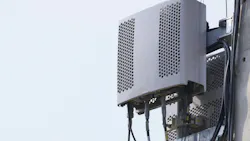
Qualcomm said it will supply SpaceX with radio and baseband processors, along with the software stack, for the ground-based segment of Starlink Mobile's planned 5G network in the U.S.
Starlink Mobile is SpaceX’s attempt to take on established 5G networks by combining its satellite connectivity with cellular infrastructure on the ground. The terrestrial network will be based on Qualcomm’s Dragonwing QRU100 and QDU100 platforms, which will power the radio unit (RU) and distributed units (DUs) inside each base station. By combining massive MIMO radios with efficient baseband processing, Qualcomm said it can support cellular base-station deployment at scale.
SpaceX plans to start nationwide deployment of the equipment throughout the U.S. next year, with tens of thousands of sites deployed over the multi-year agreement with Qualcomm.
The supply deal positions Qualcomm as a primary hardware supplier for the terrestrial segment of Starlink Mobile's network, which aims to combine direct-to-cell connectivity from low-Earth-orbit (LEO) satellites with high-density coverage on the ground. While satellites can extend coverage into rural and underserved regions, terrestrial base stations are able to deliver higher throughput in densely populated areas, where satellite capacity can quickly become constrained.
Qualcomm CEO Christino Amon said Starlink Mobile is expected to be “one of the largest 5G deployments” in the U.S.
For one of its key building blocks, Starlink will use massive MIMO RUs with 64 transmit (TX) and 64 receive (RX) paths, bringing advanced antenna capabilities to its terrestrial mobile network.
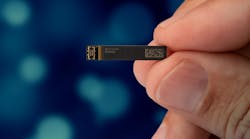
The QRU100 sits at the heart of the RU, supporting the core radio functions behind the massive MIMO architecture, which helps improve network coverage, capacity, and spectral efficiency. The QDU100 provides high-performance, efficient, latency-sensitive PHY processing from inside the DU. Offloading the Layer 1 processing to hardware accelerators such as QDU100 is key to keeping up with strict latency and power-efficiency demands of 5G.
Together with commercial-grade Layer 1 software, the new hardware is intended to improve performance per watt across both the RUs and the DUs, translating energy efficiency into better economics for Starlink Mobile and other large-scale deployments.
“Building a nationwide network demands high performance and power efficiency at every site,” said Durga Malladi, EVP and GM of edge and data center solutions at Qualcomm.
Qualcomm said the Dragonwing-powered building blocks will give Starlink the flexibility to deploy a multi-band network across multiple rollout waves.
About the Author
 James Morra
Senior Editor
James Morra is the senior editor for Electronic Design, covering the semiconductor industry and new technology trends, with a focus on power electronics and power management. He also reports on the business behind electrical engineering, including the electronics supply chain. He joined Electronic Design in 2015 and is based in Chicago, Illinois.



Comment About the Article
To join the conversation, and become an exclusive member of Electronic Design, create an account today!
 Leaders Logo
Leaders relevant to this article: