5 New Raspberry Pi Hardware Updates
What you'll learn:
- How the AI HAT + 2 adds local generative-AI and computer-vision acceleration to Raspberry Pi 5.
- What Compute Module 5 and Raspberry Pi 500+ offer for embedded and desktop designs.
- How new 3-GB Raspberry Pi 4 and 1-GB Raspberry Pi 5 options trade memory for lower cost.
Raspberry Pi never stops sparking joy and innovation. These are boards that don’t end up in a box never to be touched again, like so many other dev boards and single-board computers (SBCs). They inspire us, the community inspires us, and what we do with them comes with a level of ease that continues those feelings. The following is a roundup of the latest from Raspberry Pi as of September 2026. Your particular flavor of Pi is probably in this list.
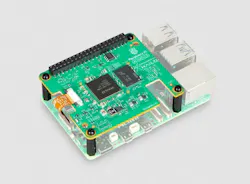
Raspberry Pi’s AI HAT + 2 is an add-on board that enables the Raspberry Pi 5 to run generative AI. Both the AI accelerator and memory work together to run large language models, vision language models, and computer vision locally instead of depending on cloud services. The board targets home automation, smart cameras, robotics, and industrial systems. It also handles local processing for users prioritizing data privacy, offline operation, and low latency. On top of that, AI HAT + 2 supports object detection and pose estimation.
Product: AI Hat + 2
Company: Raspberry Pi
Form Factor: HAT+ add-on board
Interface: PCIe connection to Raspberry Pi 5
Software: Integrated with Raspberry Pi’s camera software stack
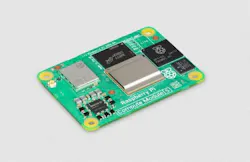
The Compute Module 5 is the Pi 5 in a smaller package, so that users can add Pi hardware to their projects. This module doesn’t plug into a monitor or peripherals. Instead, it connects to a carrier board that has the ports and connections for a certain setup. Raspberry Pi’s CM5 is suited for robotics, industrial equipment, kiosks, and other embedded systems that may not be able to use a full-size Raspberry Pi board. Users can even choose specific memory and storage configurations, depending on their project needs.
Product: Compute Module 5
Company: Raspberry Pi
Storage: 0 GB (“Lite”), 16-, 32-, or 64-GB eMMC options on module
Memory: 1x 2 GB/4 GB/8 GB/16 GB LPDDR4 4267 SDRAM
GPU: VideoCore VII (supports OpenGL ES 3.1, Vulkan 1.2, dual 4Kp60 HDMI output)
USB: Up to 1x USB 2.0 + 2x USB 3.0 (carrier board)
Display: 2x HDMI 2.0 up to 4Kp60
GPIO: 100-pin connector
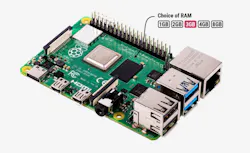
Raspberry Pi added a 3-GB version of the Raspberry Pi 4 Model B. It gives buyers a less-costly option as LPDDR4 memory continues to push up the costs of higher-RAM models. This comes with the quad-core Cortex-A72 processor, USB 3.0 connectivity, and dual 4K-capable micro-HDMI outputs. The 40-pin GPIO header is still there, too.
Product: Raspberry Pi 4 3GB
Company: Raspberry Pi
Processor: Broadcom BCM2711, quad-core 64-bit Cortex-A72 at 1.8 GHz
Memory: 3-GB LPDDR4-3200 SDRAM
GPU: VideoCore VI USB: 2x USB 3.0, 2x USB 2.0
Display: 2x micro-HDMI, up to 4Kp60
GPIO: 40-pin
Storage: microSD
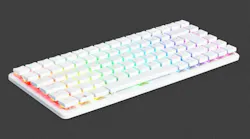
The Raspberry Pi 500+ is a small desktop. It’s an all-in-one with a mechanical keyboard. Inside, there’s an M.2 NVMe slot that accepts standard 2280 drives, so owners can add a bigger SSD later. Raspberry Pi said the 500+ is for those who want more memory and built-in NVMe storage without looking for extras. It ships with 16 GB of RAM and a 256-GB SSD.
Product: Raspberry Pi 500+
Company: Raspberry Pi
Processor: Arm Cortex-A76 quad-core 64-bit at 2.4 GHz
Memory: 1x 16-GB SDRAM
Storage: 256-GB Raspberry Pi SSD, internal M.2 NVMe
GPU: VideoCore VII
Display: 2x micro-HDMI, up to 4Kp60
USB: 2x USB 3.0, 1x USB 2.0
GPIO: 40-pin header
Operating System: Raspberry Pi OS
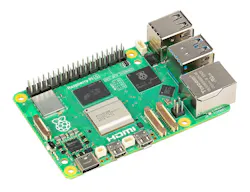
The 1GB model gives buyers a cheaper way to get the same core platform. It includes the 2.4-GHz quad-core Cortex-A76 processor, VideoCore VII GPU, and PCIe connectivity, found on other Pi 5 models. The tradeoff is the 1 GB of memory, which limits it to basic projects and lighter workloads.
Product: Raspberry Pi 5 1GB
Company: Raspberry Pi
Processor: Broadcom BCM2712, quad-core 64-bit Arm Cortex-A76 at 2.4 GHz
Memory: 1x 1-GB SDRAM
GPU: VideoCore VII
Graphics: OpenGL ES 3.1, Vulkan 1.3
USB: 2x USB 3.0, 2x USB 2.0
Display: 2x 4K60p micro-HDMI
Storage: microSD, PCIe 2.0 x1 interface
GPIO: 40-pin
Final Thought
The DRAM crisis has hit us all in every facet of our engineering lives. I would applaud Raspberry Pi for lowering prices, but the RAM reduction doesn’t seem like a fair tradeoff. It was hard enough just to get a Raspberry Pi 5 originally; now we have to accept a lower RAM amount.
To be fair, little of what we do with a Pi requires all that much RAM to begin with. So, perhaps this is a welcome Pi 5 variant. Nonetheless, the Pi is still the de facto SBC.
The community is no less intense, though. In fact, I believe that in the face of limitations, like 1-GB RAM, engineers figure out a way to make it work. It’s our nature.
>>Check out this TechXchange for similarly related content
About the Author
 Cabe Atwell
Cabe Atwell
Technology Editor, Electronic Design
Cabe is a Technology Editor for Electronic Design.
Engineer, Machinist, Cartoonist, Maker, Writer. A graduate Electrical Engineer actively plying his expertise in the industry and at his company, Gunhead. When not designing/building, he creates a steady torrent of projects and content in the media world. Many of his projects and articles are online at element14 & SolidSmack, industry-focused work at EETimes & EDN, and offbeat articles at Make Magazine. Currently, you can find him hosting webinars and contributing to Electronic Design and Machine Design.
Cabe is an electrical engineer, design consultant and author with 25 years’ experience. His most recent book is “Essential 555 IC: Design, Configure, and Create Clever Circuits”
Cabe writes the Engineering Life & Engineering on Friday blog on Electronic Design.
See Cabe's cartoons & comic strips here.