Devices offer compact thermal protection for lithium batteries
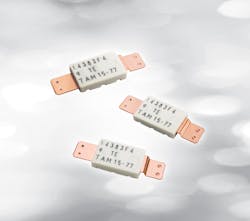
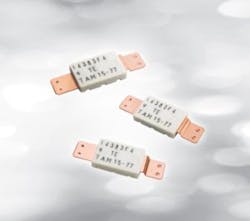
Utilizing MHP (metal hybrid PPTC) technology, the MHP-TAM device combines a bimetal protector in parallel with a PPTC (polymeric positive temperature coefficient) device. In battery applications, the MHP-TAM device helps provide resettable overtemperature protection to shut down the battery when a fault is detected. The device rests when the fault is removed. The devices in the MHP-TAM series feature different open temperatures, ranging from 72°C to 90°C (typical). They also offer two levels of hold currents: low-current (approximately 6 A at 25°C) and high-current (approximately 15 A at 25°C).
“To help meet the thermal protection requirements of lithium polymer battery applications, our new MHP-TAM devices have been tested to withstand the harshest humidity test conditions in the battery industry. High reliability is important since OEMs are tightening their component reliability requirements for lithium polymer battery packs used in consumer applications,” said Amy Chu, product manager at TE Circuit Protection. “Over the last 30 years, TE Circuit Protection has been a front-runner in utilizing PPTC technology to introduce high-reliability solutions for battery protection. The addition of the new MHP-TAM series offers designers even more choices when selecting the best protection device for today’s consumer electronics.”
The MHP-TAM series complies with the regulatory agency requirements of the most rigorous international quality and safety standards: UL, cUL, and CB.
About the Author
 Rick Nelson
Rick Nelson
Contributing Editor
Rick Nelson is a technical journalist who has served as executive editor of Test & Measurement World, chief editor of EDN, and executive editor of EE-Evaluation Engineering. He has also contributed to publications including Vision Systems Design and Electronic Design, and he has participated in many live panel discussions and webcasts. Rick has also held systems-engineering and product-development positions at General Electric and Litton Industries. He received his B.S.E.E. degree from The Pennsylvania State University.
Comment About the Article
To join the conversation, and become an exclusive member of Electronic Design, create an account today!
 Leaders Logo
Leaders relevant to this article: