Key Highlights
- How it might be possible to recreate old technology.
- What old technology has been remade commercially?
- How I see remanufacturing becoming a whole new industry in the near future.
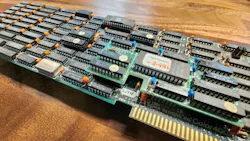
I was hired to design a replacement for an obsolete audio IC. I did it. I made a digital replacement. It worked much like an MP3 player. Instead of burning the audio sample onto the audio IC, the user just copies them over to an SD card or onboard non-removable flash memory.
The original analog IC was made sometime in the '60s or '70s. The company I worked for had an enormous product line that essentially revolved around these chips. But, they were always at the mercy of the suppliers having stock. Instead of planning for that, though, they went into crisis mode when that stock suddenly dried up. Scrambling and stumbling.
I recommended that the company take on the manufacturing of the original ICs. Just because it’s old technology doesn’t mean it has to disappear. The original chip worked. Worked well. Why replace it with a kludged together digital emulator? But the end of the story is they didn’t take on the manufacturing of the audio IC. The old product line ended in its original form.
Years Later
Years later, I again ask, why end any component? In the age of manufacturing wonders, 1-nm chips, 3D printing, and infinite capacity, why can’t we continue the manufacture of every electronic component indefinitely?
I recently wrote about the Zilog Z80 turning 50 years old. The original Z80 ended its manufacture on June of 2024 at the age of 48 years (they started in June of 1976, coincidentally).
But why end it? Someone somewhere wants a sparkly new Z80 from Zilog, guaranteed. Maybe it’s all they know how to work with. Maybe it’s for a curious tinkerer. Maybe someone wants to make a shrine to their digital Z80 deity. Whatever the case may be, I think a new manufacturing model should be adapted for electronics.
Print on Demand
We’ve heard of it, used it, want to use it. If I want a custom t-shirt or printed magazine, I can get it right now. I can get a thousand of them, or just one.
Printing a magazine and printing a circuit board are similar, in a way. Printing an integrated circuit isn’t too far from that. We can 3D-print circuit boards, but you’re probably wondering how hard is it to make an IC. I talk a bit about what's happening in this space in this roundup. Any of those stories/technologies are a jumping off point for the print-on-demand idea.
The Pitch
I suppose I'm making a pitch for a new type of business — I’ll call it Infinite Legacy Manufacturing (ILM) for the lack of a better name. Any legacy part can be manufactured forever. Simple. I like it.
You’re probably worried about whether there's room for a new fab company. Can a new fab company compete with TSMC? No. Will TSMC make old analog audio ICs or Z80s? No. There's the space.
Here's how I see it. A company like Zilog would license out the design of “X” IC. The new ILM company has access to that design. They pay Zilog a small fee for every new chip sold. You could have a tiered pricing for those fees for various quantities. I think it’s an altruistic exercise in maintaining human legacy, but there's also a tiny trickle of legacy products still producing revenue. It’s win-win, and it was done to great success recently — in a way.
Using Current Technology to Make Older Products
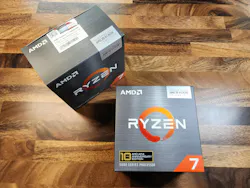
3D-printing full chips might be some ways away, but manufacturing old technology using modern fabrication equipment is completely doable.
This sort of happened recently with an AMD processor. As the DRAM crisis unfolds, many people are choosing to stick with their AMD AM4 platform and their old DDR4 RAM. However, AMD moved past that generation years ago, and forged ahead with its AM5 CPU socket and smaller nanometer production.
So, with this enormous demand to max-out the last generation, they brought back their best gaming processor for the masses who needed an upgrade, the Ryzen 7 5800X3D. The masses I mentioned might predominantly be gamers. The 5800X3D CPU was the top-performing gaming CPU in those years. Between AMD and Intel, the 5800X3D was the best there was. It still outperforms CPUs that came later.
(If you’re curious, the current top gaming CPU is the 9800X3D on AMD's AM5 socket platform. But who has DDR5 RAM money these days?)
AMD no longer had the fab technology they used back in 2022 then the 5800X3D processor was first introduced. The company had to come up with a new way to make the same thing. It did, and the new one hit the market with clamor and appreciation. Read about how they did it in this article.
Simply put, AMD made old tech again. It’s possible. Judging by the process, the company achieved it. I suspect this will not be the last CPU remake they’ll do.
Cottage Industry FTW
I can see this adopted by just about any electronic component. I’m mostly thinking about reviving some sort of chip-based product. However, could this be applied to the more passive components? Capacitors, resistors, transistors even?
Have you every said something like, “Yeah, the X resistor from ABC company was the best. Wish we could get those again.” I know I have. So, why not make those, too? When the machines are plentiful and easy to work with, we’ll have this. 3D printing parts as a whole is a $24.2 billion USD industry — $11.6 billion of it is printing this directly for customers, according to the report. I can see printing electronics eventually beating that.
I think a vast cottage industry will pop up around my “Infinite Legacy Manufacturing” idea sooner than we think. The end of obsolescence is close. I have so many old and discontinued electronics that could use some parts. I can’t wait.
I want to know your thoughts about thisa discussion. Comment in the section below. This link will take you there.
About the Author

Cabe Atwell
Technology Editor, Electronic Design
Cabe is a Technology Editor for Electronic Design.
Engineer, Machinist, Cartoonist, Maker, Writer. A graduate Electrical Engineer actively plying his expertise in the industry and at his company, Gunhead. When not designing/building, he creates a steady torrent of projects and content in the media world. Many of his projects and articles are online at element14 & SolidSmack, industry-focused work at EETimes & EDN, and offbeat articles at Make Magazine. Currently, you can find him hosting webinars and contributing to Electronic Design and Machine Design.
Cabe is an electrical engineer, design consultant and author with 25 years’ experience. His most recent book is “Essential 555 IC: Design, Configure, and Create Clever Circuits”
Cabe writes the Engineering Life & Engineering on Friday blog on Electronic Design.
See Cabe's cartoons & comic strips here.