5 Techniques for 3D Printing Electronics
What you’ll learn:
- Insight into how researchers are using 3D printing to make electronic components.
- How different materials and techniques are being employed to print electronics.
- Why 3D printing could change how some electronics are manufactured.
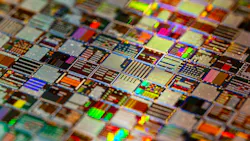
We've been 3D printing mechanical parts for decades, and now researchers are looking at ways to harness that same technology to manufacture electronics. Instead of printing a case or other parts and adding the electronics afterward, these techniques use conductive materials, semiconductors, and other electronic materials to create the devices themselves.
While some are still in the experimental stage, they show several different ways 3D printing could eventually change how electronics are manufactured. In this roundup, we look at five of the latest 3D-printing techniques and systems researchers are using to print electronics.
Before I launch into the roundup, I just wanted to let you know we also have a Podcast about advanced 3D printing in electronics from TE Connectivity. Everyone is microstepping towards 3D printing electronics. We just can't get there fast enough.
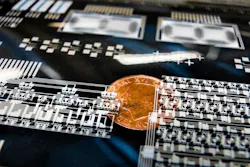
Researchers at Linköping University and RISE developed a technique to print integrated circuits containing more than 100 organic electrochemical transistors using a screen printing process and organic electrochemical ink. The team was able to put more than 1,000 organic transistors on an A4-sized plastic substrate, using PEDOT:PSS as the primary electronic material. The printed circuits were designed for applications such as electrochromic displays and IoT devices.
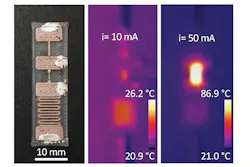
Researchers at MIT have developed a copper-doped polymer that can function as a resettable electronic switch, allowing conductive traces and basic logic circuits to be 3D-printed without any conventional electronic components. The material changes resistance when heated by electrical current, then returns to its original state when it cools, acting as traditional gates.
The team was able to perform more than 4,000 switching cycles and is currently working to print more complex electronics, including a functional motor.
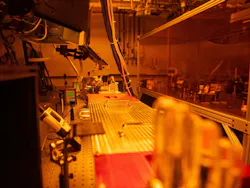
Researchers at the University of Texas were able to develop a tabletop extreme ultraviolet (EUV) lithography system that removes some of the equipment found in conventional semiconductor patterning equipment, making it smaller and able to fit on a tabletop. When combined with a volumetric 3D patterning technique, the system exposes multiple layers of nanostructures in parallel, which effectively reduces the amount of processing time from days to just minutes.
At this point, the researchers can only print patterned periodic structures, which are useful in memory chips and photonics.
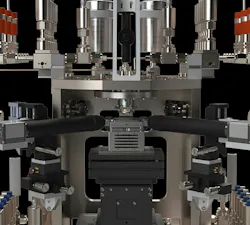
ATLANT 3D's Direct Atomic Layer Processing (DALP) uses a small microreactor to build electronic materials one layer at a time. Unlike traditional chipmaking, the process doesn't require the masks typically used to create tiny patterns. It can handle many materials as well, including metals, semiconductors, and oxides, and it's able to deposit them on flat, uneven, or other complicated surfaces. ATLANT 3D says the system can work with more than 450 materials, opening the door to the creation of smaller electronic devices.
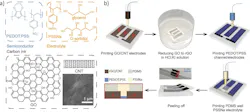
Researchers at Linköping University in Sweden developed a method to 3D-print working organic electrochemical transistors (OECTs) using a BIO X wet-extrusion 3D printer from CELLINK and different conductive polymer inks. The printed transistors are flexible and could be deposited onto uneven surfaces, including a flower and a bell pepper.
The researchers used their system for a pair of applications, including detecting dopamine and neuromorphic electronics. They stated how the 3D-printing system could be used to make electronic components in the future, rather than just the structures that hold them.
Final Thought
We’re not at the point yet where you can 3D-print a modern CPU at home, and these techniques aren't going to replace traditional chipmaking anytime soon. But that's not really the point. What matters is that researchers are looking at different ways to make that a reality in the future. They’re finding ways to print transistors, logic circuits, and other electronic structures directly onto different materials and surfaces.
As these techniques continue to advance, 3D printing could make it possible to build electronics in places and in unique shapes that are difficult or impossible to manufacture using today's traditional methods.


About the Author
 Cabe Atwell
Cabe Atwell
Technology Editor, Electronic Design
Cabe is a Technology Editor for Electronic Design.
Engineer, Machinist, Cartoonist, Maker, Writer. A graduate Electrical Engineer actively plying his expertise in the industry and at his company, Gunhead. When not designing/building, he creates a steady torrent of projects and content in the media world. Many of his projects and articles are online at element14 & SolidSmack, industry-focused work at EETimes & EDN, and offbeat articles at Make Magazine. Currently, you can find him hosting webinars and contributing to Electronic Design and Machine Design.
Cabe is an electrical engineer, design consultant and author with 25 years’ experience. His most recent book is “Essential 555 IC: Design, Configure, and Create Clever Circuits”
Cabe writes the Engineering Life & Engineering on Friday blog on Electronic Design.
See Cabe's cartoons & comic strips here.
Comment About the Article
To join the conversation, and become an exclusive member of Electronic Design, create an account today!
 Leaders Logo
Leaders relevant to this article: