Debug Arm and RISC-V Firmware Without Hardware

What you'll learn:
- How Ozone-Sim simulates Arm and RISC-V firmware without physical hardware.
- How the platform supports code coverage, profiling, and multiple compiler toolchains.
- How GDB Server and Standalone modes support debugging, regression testing, and CI.
Embedded software development often begins before the hardware is even in the prototype stage. Programmers will write firmware drivers, task an RTOS, and create application logic as the hardware is still in the routing phase, while waiting for parts to be delivered.
SEGGER’s Ozone-Sim helps bridge the gap between the hardware and software using an instruction simulator, debugger, and profiler for the popular Arm and RISC-V chips widely used in embedded platforms (Fig. 1). What’s more, this can be done locally on a desktop PC without needing a J-Link probe.
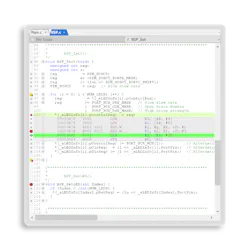
Ozone-Sim was developed to assist programmers in testing and debugging their software without needing the physical hardware. “Software development often starts long before production hardware is available, yet development teams need fast and reliable ways to test and analyze their code," stated Johannes Lask, SEGGER Project Manager, in a recent press release.
He added, “By enabling software execution in a simulated environment, Ozone-Sim helps teams start development earlier, automate testing, and gain insight into application behavior throughout the development process.”
SEGGER also released a standalone debugging platform known as Ozone to function with third-party probes and simulators using the GDP Remote Protocol platform, allowing users to take advantage of tools from different manufacturers. Ozone-Sim, however, is launched separately but works natively with Ozone without the need for any additional software.
Ozone-Sim simulates the Arm and RISC-V processor architectures, allowing firmware to be executed in that virtual environment. Thus, users are able to compile and prepare the firmware in the same fashion as using physical hardware. They can also configure the simulation, import the compiled firmware, debug and analyze the code, and review their execution rights. This includes the full analysis toolchain (Fig. 2), including SEGGER’s Embedded Studio, as well as GCC-based IDEs, Clang/LLVM, IAR, the Arm Compiler, and more.
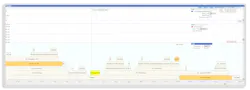
According to SEGGER, Ozone-Sim can display real-time code coverage and profiling in the same fashion as using real hardware with J-Trace. Switching between the simulated environment and physical hardware is straightforward, meaning users can validate their software virtually, then confirm it on the actual hardware without issue. The platform can also execute embedded applications at millions of instructions per second, which they accomplished on an AMD Ryzen 9 at a staggering 700 million instructions.
Furthermore, Ozone-Sim can operate in two separate modes depending on the application. In GDB Server mode, the simulator functions as a standard GDB target, allowing users to connect between Ozone, Visual Studio Code, Eclipse, or other GDB platforms.
The platform also incorporates a Standalone mode that executes firmware directly from an ELF executable. Applications can continue to run in this mode until they exit through semihosting, encounter an unhandled exception, or enter an endless loop, suiting it for regression testing and continuous-integration (CI) environments.
As embedded applications continue to evolve in their complexity, tools that enable debugging, profiling, and automated testing without physical hardware are becoming increasingly valuable. For developers building edge AI platforms, industrial controllers, and connected embedded devices, Ozone-Sim provides an innovative pathway to shorten the development lifecycle while still maintaining that familiar debugging environment.
About the Author
 Cabe Atwell
Cabe Atwell
Technology Editor, Electronic Design
Cabe is a Technology Editor for Electronic Design.
Engineer, Machinist, Cartoonist, Maker, Writer. A graduate Electrical Engineer actively plying his expertise in the industry and at his company, Gunhead. When not designing/building, he creates a steady torrent of projects and content in the media world. Many of his projects and articles are online at element14 & SolidSmack, industry-focused work at EETimes & EDN, and offbeat articles at Make Magazine. Currently, you can find him hosting webinars and contributing to Electronic Design and Machine Design.
Cabe is an electrical engineer, design consultant and author with 25 years’ experience. His most recent book is “Essential 555 IC: Design, Configure, and Create Clever Circuits”
Cabe writes the Engineering Life & Engineering on Friday blog on Electronic Design.
See Cabe's cartoons & comic strips here.