5 AI-Based SBCs for Edge Computing and Robotics
What you'll learn:
- How new AI-based SBCs combine CPUs, GPUs, and NPUs to handle edge workloads.
- Key specs for five 2026 boards from Seeed Studio, Radxa, Kontron, Arduino, and SpacemiT.
- Which connectivity, storage, and expansion features support robotics, vision, and embedded AI applications.
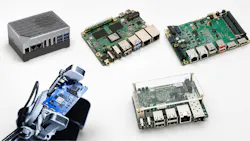
With AI dominating nearly every industry, including the maker market, it’s easy to see why single-board computer (SBC) manufacturers are capitalizing on the latest tech to deliver new boards to the masses. The latest SBCs come packed with multiple-core processors outfitted with advanced NPUs designed to process everything from LLMs to advanced imagery and more. In this roundup, we’ll take a look at five of the popular SBCs to hit the market in 2026.

Seeed Studio’s reComputer RK3576, the company’s latest Rockchip-based platform designed for edge AI applications, comes equipped with optimized edge AI model demos for CV, LLM, VLM, STT, and more. The board integrates Rockchip’s octa-core RK3576 chip that packs 4x Arm Cortex-A72 cores and 4x Arm Cortex-A53 cores, along with an Arm Mali-G52 MC3 GPU, up to 16 GB of LPDDR5 RAM, and a 6-TOPS NPU AI accelerator.
The reComputer also features a host of storage expansion options: a MicroSD card slot, SPI flash, and an M.2 socket for optional NVMe SSDs. Connectivity includes a pair of Gigabit Ethernet RJ45 ports (one offers PoE support), Wi-Fi 6 and Bluetooth 5.4 with FPC antenna, along with optional support for 4G LTE, LoRaWAN, or Wi-Fi Halow via a mini PCIe socket and SIM card slot. There’s also a USB 3.0 Type-A port, 3x USB 2.0 Type-A ports, a USB Type-C OTG port, and the typical 40-pin GPIO header found on a host of SBCs.
Product: reComputer RK3576-20
Company: Seeed Studio
Form Factor: Edge-AI single-board computer / Rockchip AI box
CPU: Rockchip RK3576 octa-core SoC with 4x Arm Cortex-A72 cores at 2.2 GHz and 4x Arm Cortex-A53 cores at 1.8 GHz
GPU: Arm Mali-G52 MC3
NPU: 6-TOPS INT8 NPU AI accelerator; expandable up to 26 TOPS via PCIe AI acceleration
Memory: 4-, 8-, or 16-GB LPDDR5 RAM
Storage: MicroSD card slot, SPI flash for bootloader, and optional NVMe SSD via M.2 Key-M socket
Communication: 2x Gigabit Ethernet RJ45 ports, one with PoE support via additional module; onboard Wi-Fi 6 and Bluetooth 5.4 with FPC antenna; optional 4G LTE, LoRaWAN, or Wi-Fi HaLow via mini PCIe socket and SIM card slot
Expansion: M.2 Key-M socket for NVMe SSD or AI accelerator, mini PCIe socket, SIM card slot, 40-pin GPIO header, RTC header, fan header
Connections: USB 3.0 Type-A, 3x USB 2.0 Type-A, USB Type-C OTG with DisplayPort Alt Mode, HDMI 2.1, 4-lane 22-pin MIPI DSI connector, 2x 22-pin 4-lane MIPI CSI connectors, 3.5-mm audio jack, 2x Gigabit Ethernet RJ45, 40-pin GPIO header, power barrel jack
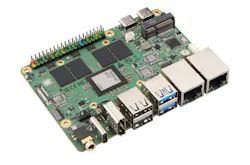
The Dragon Q8B from Radxa takes advantage of Qualcomm’s Snapdragon 8cx Gen3 octa-core SoC, which is designed to drive the company’s proprietary AI Engine up to a staggering 29+ TOPS. The 8cx Gen3 SoC packs 4x Kryo Prime cores, 4x Kryo Efficiency cores, an Adreno 690 GPU, and up to 32 GB of LPDDR4x RAM. It also comes with a Qualcomm Hexagon Processor and Sensing HUB (DSP) and a Qualcomm Neural Processing Engine to drive AI applications.
In addition, the Dragon Q8B features a MicroSD card slot, UFS 3.1 module connector, and a pair of M.2 Key-M PCIe Gen3 sockets for NVMe expansion. Connectivity seems lacking, with only a pair of 2.5-GbE RJ45 ports and Wi-Fi and Bluetooth expansion options via M.2 sockets. That said, users do get a pair of USB 3.2 Gen 2 Type-C ports, 2x USB 3.2 Gen 2 Type-A ports, and 2x USB 2.0 Type-A ports.
Product: Dragon Q8B
Company: Radxa
Form Factor: Edge-AI single-board computer / motherboard, 100 × 75 mm
CPU: Qualcomm Snapdragon 8cx Gen 3 / SC8280XP octa-core SoC with 4x Kryo Prime cores at 3.0 GHz and 4x Kryo Efficiency cores at 2.4 GHz
GPU: Qualcomm Adreno 690 GPU
NPU: Qualcomm Hexagon NPU; Qualcomm AI Engine up to 29+ TOPS; Qualcomm Hexagon processor and Qualcomm Sensing Hub
Memory: Up to 32 GB of LPDDR4x RAM, up to 4,266 MT/s, 128-bit bus
Storage: MicroSD card slot, UFS 3.1 module connector, 1x M.2 M-Key 2280 PCIe 3.0 x4 slot, and 1x M.2 M-Key 2280 PCIe 3.0 x2 slot
Communication: 2x 2.5-GbE RJ45 ports; M.2 E-Key 2230 slot for Wi-Fi 6E / Bluetooth 5.3 module
Expansion: 2x M.2 M-Key 2280 sockets for NVMe expansion; M.2 E-Key 2230 socket for Wi-Fi/Bluetooth; UFS 3.1 module connector; PCIe 3.0 x1 FPC connector; 40-pin GPIO header with UART, I2C, SPI, and GPIO support
Connections: 2x USB 3.2 Gen 2 Type-C ports with DisplayPort 1.4 Alt Mode, 2x USB 3.2 Gen 2 Type-A ports, 2x USB 2.0 Type-A ports, USB Type-C power port, HDMI 2.1, 2x 2.5-GbE RJ45, 3.5-mm headphone jack, microphone connector, power input header, RTC connector, fan connector, 40-pin GPIO header
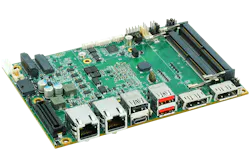
The 3.5-SBC-PTL developed by Kontron is designed to drive AI applications using Intel’s hybrid-architecture Core Ultra 300 Series processors with upgraded iGPU and next-gen integrated NPUs. Depending on the model, the board comes equipped with up to a 16-core Ultra X9 388H processor, an Arc B370 GPU, and up to 128 GB of DDR5 RAM via a pair of SODIMM sockets. The board also has an integrated NPU with up to 12 Xe GPU cores to deliver up to 180 TOPS.
Connectivity options for the 3.5-SBC-PTL include a pair of 2.5-GbE LAN RJ45 ports as well as Wi-Fi and Bluetooth options via M.2 sockets. Also in the mix is a trio of USB 3.2 Gen 2 ports, a pair of USB 2.0 ports, an 8x GPIO header, and more.
Product: 3.5-SBC-PTL
Company: Kontron
Form Factor: 3.5-in. single-board computer / ECX board, 146 × 105 mm
CPU: Intel Core Ultra 300 Series processors; up to Intel Core Ultra 9 388H depending on model
GPU: Intel Arc B370 on the Core Ultra 5 338H model; Intel Graphics on other models; Xe3-based integrated GPU architecture
NPU: Integrated Intel NPU 5 for on-device AI inference; Kontron states overall platform AI capability up to 180 TOPS using the integrated NPU and up to 12 Xe GPU cores
Memory: Up to 128 GB of DDR5 RAM via 2x DDR5-6400/7200 SODIMM sockets
Storage: 1x M.2 Key-M 2280 socket with PCIe x4 for NVMe SSD; 1x M.2 Key-B 3042/3052/2280 socket with PCIe x2, USB 2.0, and UIM for SSD, WWAN, or other expansion; 1x M.2 Key-E 2230 socket with PCIe x1 and USB 2.0 for WLAN, Bluetooth, or other expansion
Communication: 2x 2.5-GbE LAN RJ45 ports with TSN support; Wi-Fi, Bluetooth, and WWAN options via M.2 slots
Expansion: 3x M.2 slots; SIM card holder by header; board-to-board connector for additional I/O; board-to-wire connector for extra GPU / AI acceleration performance on select CPU configurations; 8x digital I/O; 2x RS-232/422/485; 2x CAN bus
Connections: 3x USB 3.2 Gen 2 ports, including 2x Type-A and 1x Type-C with DisplayPort and power delivery; 2x USB 2.0 ports; 2x 2.5-GbE LAN RJ45 ports; 1x eDP/LVDS; 3x DisplayPort, including 2x full-size DisplayPort and 1x DisplayPort over USB-C; 2x RS-232/422/485 headers; 8x digital I/O header; 2x CAN bus headers; audio headers for speaker-out, line-in, line-out, mic-in, and S/PDIF out; board-to-board connector; board-to-wire connector; 9- to 36-V DC input
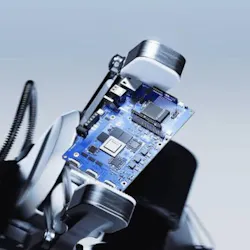
Arduino’s VENTUNO Q is another platform designed for edge AI applications. It combines a Dragonwing IQ-8275 processor and STM32H5F5 microcontroller to drive everything from LLMs to complex robotics. Beyond the eight-core Qualcomm Kryo and the Arm Cortex-M33 processors, the board packs an Adreno 623 GPU, Hexagon NPU (delivering up to 40 TOPS), 16 GB of LPDDR5 RAM and 64 GB of eMMC for storage.
The VENTUNO Q also includes Wi-Fi 6 with onboard antenna, Bluetooth 5.3 with onboard antenna, and a single RJ45 port for connectivity options. Among its other features are 3x MIPI CSI connectors, a single USB-C port, 2x USB 3.0 Type-A ports, and 2x USB 3.0 ports via a JOMEGA header.
Product: VENTUNO Q
Company: Arduino
Form Factor: Edge AI single-board computer / edge AI computer, 160 × 100 × 25.8 mm
CPU: Qualcomm Dragonwing IQ8 / IQ-8275 processor with 8-core Qualcomm Kryo CPU, plus STM32H5F5 microcontroller with Arm Cortex-M33 processor at 250 MHz
GPU: Qualcomm Adreno 623
NPU: Qualcomm Hexagon NPU delivering 40 dense TOPS
Memory: 16-GB LPDDR5 RAM
Storage: 64-GB eMMC plus M.2 connector for NVMe Gen4 external storage
Communication: Wi-Fi 6 at 2.4/5/6 GHz with onboard antenna, Bluetooth 5.3 with onboard antenna, and 1x 2.5Gbit RJ45
Expansion: M.2 connector for NVMe Gen4 storage; 3x MIPI CSI connectors muxed with 2x MIPI CSI on JMEDIA header; JOMEGA header with 2x USB 3.0, CAN-FD, and additional I/O; UNO Shield headers; JMISC header for audio; JMEDIA header for display signals
Connections: 1x USB-C port with host/device role switching, power role switching, and video output; 2x USB 3.0 Type-A ports; 2x USB 3.0 ports via JOMEGA header; 1x 2.5-Gb RJ45; 3x MIPI CSI connectors; HDMI muxed with MIPI DSI on JMEDIA header; MIPI DSI pins on JMEDIA header; DisplayPort Alt Mode video output via USB-C; 1x CAN-FD PHY on screw terminal; 3x CAN-FD without PHY on JOMEGA header; 1x CAN-FD without PHY on UNO Shield headers; audio via JMISC header; USB-C power, 5.5- × 2.1-mm barrel jack, screw terminal, and JOMEGA power input
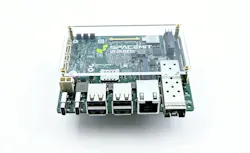
SpacemiT’s new K3 Pico-ITX SBC follows suit with the other boards in this roundup as it’s designed for AI applications, delivering up to 60 TOPS of performance. The board comes packed with the company’s K3 SoC that offers 8x 64-bit RISC-V X100 cores, 8x RISC-V A100 AI cores, an Imagination Technologies BXM4-64-MC1 GPU, up to 32 GB of LPDDR5 RAM, and 128 or 256 GB of UFS 2.2 storage.
The K3 Pico-ITX SBC maintains additional storage in the form of an M.2 slot for SSDs, along with a MicroSD slot for additional expansion. Networking includes a 10-GbE SFP+ cage, Gigabit Ethernet RJ45 port, Wi-Fi 6 and Bluetooth 5.2 module, and 4G LTE/5G cellular options. There’s also a pair of USB-C ports, 4x USB Type-A ports, a USB 3.2 port with DP 1.2 Alt mode, and RTI FPC connectors for motion-control and robotics applications.
Product: K3 Pico-ITX SBC
Company: SpacemiT
Form Factor: Pico-ITX Plus single-board computer, 100 × 86 mm
CPU: SpacemiT K3 SoC with 8x 64-bit RISC-V X100 cores clocked up to 2.4 GHz, RVA23 compliant
GPU: Imagination Technologies BXM4-64-MC1 GPU with Vulkan 1.3, OpenCL 3.0, and OpenGL ES 1.1/2.0/3.2 support
NPU: 8x RISC-V A100 AI cores with up to 1,024-bit RVV1.0 parallel-computing support; up to 60-TOPS INT4 AI performance
Memory: 8-, 16-, or 32-GB LPDDR5 RAM at 6,400 MT/s
Storage: 128- or 256-GB UFS 2.2 storage; M.2 M-Key 2280 PCIe Gen3 x4 socket for NVMe SSD; SPI NOR flash; MicroSD slot
Communication: 10-GbE SFP+ cage, Gigabit Ethernet RJ45 port, Wi-Fi 6 and Bluetooth 5.2 module with IPEX antenna connectors, and optional 4G LTE / 5G cellular via M.2 B-Key socket and NanoSIM card slot
Expansion: M.2 M-Key 2280 PCIe Gen3 x4 socket for NVMe SSD; M.2 B-Key 2242/3052 socket with PCIe Gen2 x2 and USB 2.0 for cellular expansion; NanoSIM card slot; 2x RTI FPC connectors supporting EtherCAT, CAN-FD, and other real-time interfaces for motion control and robotics; EC-IO connector for the embedded controller; UART and JTAG connectors
Connections: 10-GbE SFP+ cage; Gigabit Ethernet RJ45 port; 2x USB-C ports, including 1x USB 3.2 with DP 1.2 Alt Mode / USB PD and 1x USB 3.2 OTG; 4x USB 2.0 Type-A ports; eDP connector; internal audio input/output, RTI FPC connectors; EC-IO connector; 12V DC 2-pin ATX input; USB PD via USB-C; RTC battery connector; fan connector
Conclusion
As AI continues to drive the future of technology, it’s no surprise that SBC manufacturers are racing to deliver platforms capable of driving everything from machine vision to advanced robotics.
While each of the boards highlighted in this roundup target specific AI applications, they all offer a common goal: to bring advanced AI-powered hardware to both markets and makers. Whether it’s Seeed’s reComputer RK3576, Qualcomm’s Radxa Dragon Q8B, or SpacemiT’s K3 Pico-ITX, more affordable options are readily available for users to choose from to meet their goals.
About the Author
 Cabe Atwell
Cabe Atwell
Technology Editor, Electronic Design
Cabe is a Technology Editor for Electronic Design.
Engineer, Machinist, Cartoonist, Maker, Writer. A graduate Electrical Engineer actively plying his expertise in the industry and at his company, Gunhead. When not designing/building, he creates a steady torrent of projects and content in the media world. Many of his projects and articles are online at element14 & SolidSmack, industry-focused work at EETimes & EDN, and offbeat articles at Make Magazine. Currently, you can find him hosting webinars and contributing to Electronic Design and Machine Design.
Cabe is an electrical engineer, design consultant and author with 25 years’ experience. His most recent book is “Essential 555 IC: Design, Configure, and Create Clever Circuits”
Cabe writes the Engineering Life & Engineering on Friday blog on Electronic Design.
See Cabe's cartoons & comic strips here.