Analog Devices to Buy Power Chip Startup Empower in $1.5 Billion Deal
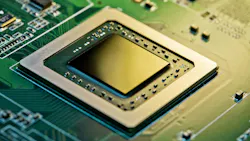
Analog Devices (ADI) said it agreed to buy power chip startup Empower Semiconductor in a $1.5 billion all-cash deal, aiming to tackle the tricky problem of efficient power delivery in AI data centers.
ADI is already one of the main players in voltage regulator modules (VRMs), which have had to evolve rapidly to handle the uniquely high currents required by GPUs and other AI processors. Delivering high-efficiency power at the point of load while responding to fast-changing current demands is now one of the most pressing challenges in system design. As things stand, traditional DC-DC converters are unlikely to keep up — at least by themselves.
The deal brings ADI together with one of the top startups building integrated voltage regulators (IVRs), which are widely seen as a solution to that problem. Empower's IVRs integrate power FETs, inductors, capacitors, and other parts of a multiphase DC-DC converter, including the interface, telemetry, and control, into a single chip. By integrating all of that in a chip package instead of a module, IVRs eliminate bulky external components used in board-level DC-DC converters and react faster to changing loads.
Empower also supplies silicon capacitors, or ECAPs, that can be embedded directly into a processor’s package. They serve as a decoupling solution both in data centers and in mobile devices such as smartphones.
By enabling power conversion closer to the processor, ADI said its combined solution with Empower will be able to not only boost power density, but also improve the efficiency and speed of the power delivery.
"AI infrastructure is fundamentally reshaping how power must be delivered, with energy now the most persistent constraint to scaling next-generation systems,” said ADI CEO Vincent Roche. Empower's IVRs will further expand its product portfolio and “help customers rearchitect their power systems and achieve the compute densities next-generation AI demands. The impact of this technology extends well beyond AI data centers to any domain where energy constrains what is possible.”
ADI has been building up its power-management product lines over the last decade. The company purchased Linear Technology in 2017 in a cash-and-stock deal valued at around $14.8 billion, then followed that with its more than $20 billion acquisition of Maxim Integrated in 2021.
A New Phase for the Integrated Voltage Regulator?
The deal comes months after Empower landed $140 million of new funding to boost production of its Crescendo series of IVRs for vertical power delivery (VPD). In VPD, DC-DC converters that cover the "last inch" of the PDN are placed directly beneath the SoC instead of crowded around it on top of the PCB.
That much closer placement means less parasitic resistance and inductance to obstruct thousands of amps of current as it traverses PCB traces. It helps reduce power losses that can add up over over longer lateral distances as well as impedance that can slow down transient response times.
Empower claims Crescendo IVRs can be up to 5X smaller, deliver 20X faster transient response times, and improve efficiency by as much as 20% versus other converter designs used to meet the massive current and bandwidth demands of AI chips.
Crescendo uses FinFET power transistors to react more quickly to load transients. The IVRs don't rely on the large power inductors and clusters of decoupling capacitors that traditional DC-DC converters need to reduce current ripple and prevent voltage droop.
Since each IVR integrates a voltage regulator into a single chip, they can be placed much closer together and much closer to the processor than in conventional board-level power architectures, shrinking the distance that their high-current outputs must travel to reach the SoC. Empower said this reduces the footprint required for both lateral “land-side package attach” and vertical “back-side PCB attach” power-delivery designs.
The IVRs are also compact enough to enable a “substrate-embedded” configuration, where the voltage regulator is located within the package substrate of the SoC, reducing the last leg of the PDN to a few millimeters.
Empower's ECAPs are already in production, and the company is gaining commercial traction with its IVRs, working in close collaboration with leading hyperscalers and AI silicon providers. Both the IVRs and ECAPs are designed to be placed under, adjacent to, or even inside the same package as the SoC being powered.
ADI said it will use its scale, broad customer reach, and manufacturing capacity to help boost adoption of both product lines.
“Our technology enables the power density, speed, and efficiency required by AI processors to reach their full potential,” said Empower CEO Tim Phillips, who will be staying at ADI to lead its IVR technology efforts. “The combination of ADI's power-management platform, scale, and operational excellence, along with the system-level benefits our merger enables, will accelerate our adoption with customers."
The deal is expected to close in the second half of 2026.
About the Author
 James Morra
James Morra
Senior Editor
James Morra is the senior editor for Electronic Design, covering the semiconductor industry and new technology trends, with a focus on power electronics and power management. He also reports on the business behind electrical engineering, including the electronics supply chain. He joined Electronic Design in 2015 and is based in Chicago, Illinois.
Comment About the Article
To join the conversation, and become an exclusive member of Electronic Design, create an account today!
 Leaders Logo
Leaders relevant to this article: