Low-Temp Method for Extracting Lithium from Abundant Rocks Could Change Battery Economics
What you’ll learn:
- MIT researchers developed a low-temperature process for extracting battery-grade lithium from the common mineral spodumene.
- The closed-loop process could help the U.S. tap into its own abundant sources of lithium, a critical element that’s currently refined primarily in China.
- The researchers have already begun commercializing the technology through an MIT spinout, Rock Zero.
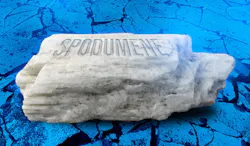
A team of researchers from MIT and elsewhere have developed a low-temperature process for extracting battery-grade lithium from the most common type of lithium-bearing mineral. Until now, extracting lithium from hard rock is an energy- and waste-intensive process that’s often far more expensive than getting lithium from brine water, which also has major environmental drawbacks.
Currently, lithium hard-rock extraction involves baking the rock at over 1,000°C and chemically leaching it to extract lithium. The rest of the rock is discarded.
The new process uses a liquid reagent to dissolve the rock into the useful forms of its constituent parts — not just battery-ready lithium salts, but also smelter-grade alumina and cement-ready silica. After the minerals are extracted, the solvent and reagent can be recovered and used again so that waste levels approach zero.
The researchers estimate the closed-loop process is half the cost of traditional lithium hard-rock extraction and could make it cost-competitive with extracting lithium from brine water.
A paper describing the process, titled “Valorization of lithium hardrock concentrates into battery raw materials and commodity products,” was recently published in Science. The researchers have already begun commercializing the technology through an MIT spinout, Rock Zero.
“By 2040, we need to quadruple production of lithium globally, which amounts to hundreds of new lithium-producing assets,” said author Camden Hunt, a former project manager in MIT’s Center for Electrification and Decarbonization of Industry. Joining Hunt on the paper are former MIT postdoc Benjamin Mowbray; PhD candidate Kalyn Fuelling; MIT undergraduate Jacqueline Prawira; Khashayar Jafari, a former senior research scientist at the MIT green cement spinout Sublime Systems; and Yet-Ming Chiang, MIT’s Kyocera Professor of Materials Science and Engineering.
From Bathrooms to Batteries
The research has its roots in a bathroom renovation. About 25 years ago, as Chiang made a trip to a hardware store to look for something that would turn clear glass blocks translucent, he stumbled on a glass etching cream that works by “eating away” at the surface of the glass. The active ingredient turned out to be ammonium fluoride.
More recently, as Chiang was brainstorming ways to chemically break apart the most abundant lithium-bearing mineral, spodumene, he thought back to that etching cream. Spodumene, like glass, consists mostly of silica.
Conventional chemistry-based methods for extracting metals from ores preferentially dissolve more reactive elements and leave behind a silica-enriched residue because of the strength of silicon-oxygen bonds. By designing their process to use a mixture of water and ammonium fluoride, the researchers are able to dissolve silica first, reversing the process.
The researchers showed they could dissolve spodumene rock at room temperature, which represented a breakthrough over traditional processes requiring extreme heat. But it was still only the first step to a closed-loop system that produced useful materials.
“Dissolving silica is the hard part in mining,” said Mowbray. “The next question was how do we apply it to impactful mineral processing problems?”
The mineral spodumene is mainly made up of three elements: lithium, aluminum, and silica. Mowbray and Hunt, who both have PhDs in chemistry, began exploring ways to refine those components separately after they were broken apart in the ammonium-fluoride solution.
The researchers successfully processed 17 different spodumene rock sources, showing its widespread applicability using rocks around the world. “You’ve heard of nose-to-tail eating?” said Chiang. “We refer to this as nose-to-tail mining. Our researchers came to MIT to look for impactful problems to work on in sustainability. With their skill sets, it was just a matter of setting them loose on this problem.”
Scaling the Process
Chiang further challenged his research team to evaluate the commercial feasibility of their new system.
The researchers worked with MIT’s Technology Licensing Office to spin out their company, Rock Zero, which is now located at The Engine and in the process of scaling up the system.
“We believe this approach is the lowest-energy, lowest-cost way of getting lithium not only out of hard rock, but period,” said Chiang. “That’s what’s motivating us to scale this. It will enable the energy transition through batteries that use lithium. This was one of the goals of The Climate Project at MIT — to work on projects that, within a short number of years, could transition from the lab to commercialization and impact.”
A full version of this story is available on the MIT News website.
Next in This Edition of PowerBites
 0and1s_dreamstime_security_152088993
 liion_dreamstime_229728474
More PowerBites

 powerbites_promo
About the Author
 Lee Goldberg
Lee Goldberg
Contributing Editor
Lee is the author of the popular PowerBites series.
Lee Goldberg is a self-identified “Recovering Engineer,” Maker/Hacker, Green-Tech Maven, Aviator, Gadfly, and Geek Dad. He spent the first 18 years of his career helping design microprocessors, embedded systems, renewable energy applications, and the occasional interplanetary spacecraft. After trading his ‘scope and soldering iron for a keyboard and a second career as a tech journalist, he’s spent the next two decades at several print and online engineering publications.
Lee’s current focus is power electronics, especially the technologies involved with energy efficiency, energy management, and renewable energy. This dovetails with his coverage of sustainable technologies and various environmental and social issues within the engineering community that he began in 1996. Lee also covers 3D printers, open-source hardware, and other Maker/Hacker technologies.
Lee holds a BSEE in Electrical Engineering from Thomas Edison College, and participated in a colloquium on technology, society, and the environment at Goddard College’s Institute for Social Ecology. His book, “Green Electronics/Green Bottom Line - A Commonsense Guide To Environmentally Responsible Engineering and Management,” was published by Newnes Press.
Lee, his wife Catherine, and his daughter Anwyn currently reside in the outskirts of Princeton N.J., where they masquerade as a typical suburban family.
Comment About the Article
To join the conversation, and become an exclusive member of Electronic Design, create an account today!
 Leaders Logo
Leaders relevant to this article: