TI Will Supply U.S.-Made Semiconductors to GE Appliances
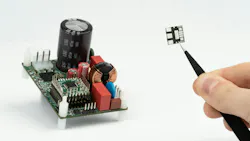
GE Appliances announced it will use U.S.-made chips from Texas Instruments in new laundry machines made at its Louisville, Kentucky headquarters.
The appliance manufacturer said TI will supply one-third of the chips for products made at the new laundry plant, with production expected to begin in 2027. According to the companies, the chips will be used for embedded processing, wireless connectivity, motor control, and power management. The partnership is part of GE Appliances’ broader commitment to U.S. manufacturing while expanding its domestic supply chain for chips and other critical components.
TI is one of the few semiconductor companies capable of producing chips at scale in the U.S. It’s been expanding its domestic manufacturing capacity, including at mega-sites in Richardson, Texas; Sherman, Texas; and Lehi, Utah.
“Expanding our work with Texas Instruments gives us access to a differentiated semiconductor portfolio backed by domestic manufacturing," said Lee Lagomarcino, VP of the clothes-care division at the Chinese-owned appliance giant. TI's processors and other components will help “our engineers design appliances that are smarter, more powerful, and more efficient than ever before. Moving forward, our domestic research and development teams can also save significant time on new solutions for U.S. consumers.”
The partnership mirrors the moves made by Apple and other electronics companies located in the U.S., which are investing more in domestic sourcing amid geopolitical tensions, component shortages, and the prospect of tariffs that could increase manufacturing costs.
TI-GE Deal is About More Than Securing Chip Supplies
For GE Appliances, strengthening its domestic supply chain is the primary goal of the partnership with TI. But the company said it’s also taking the opportunity to tee up new capabilities in its laundry products.
TI's Wi-Fi and Bluetooth LE solutions will be used to provide more robust, secure connectivity for smart appliances. GE Appliances also plans to adopt TI's power-conversion solutions, which integrate diagnostics, real-time fault protection, and advanced power-management functions. The chips are designed to boost appliance efficiency, reliability, and serviceability while supporting scalable next-generation product architectures.
TI's motor drivers will also enable more advanced control of the drain pump system in GE’s washers. By using GaN, TI said its motor drivers run at higher switching speeds with less dead time, enabling smoother control that delivers higher torque and quieter motor movement.
The drivers offer more than 99% efficiency with zero reverse recovery, helping eliminate heatsinks and increasing power density with space savings. They integrate current sensing and protection functions to improve system reliability and extend motor lifetime.
GE Appliances said it’s also exploring using TI’s intelligent microcontroller platform to bring more advanced AI into its washers and dryers. The platform features rich analog integration, advanced security, and a neural processing unit (NPU) in the same chip. The NPU is designed to run AI workloads directly on devices rather than the cloud, reducing latency and improving energy efficiency when processing at the edge.
According to GE Appliances, the technology delivers precise load control and low-power operation while enabling intelligent features such as predictive maintenance and adaptive control algorithms that boost energy efficiency and performance.
“By bringing together next-generation Wi-Fi connectivity, energy-efficient microcontrollers, edge AI capabilities, and breakthrough GaN-based motor-drive technology, TI is giving GE Appliances the building blocks to design smarter, more efficient, and more connected appliances. And we are proud to have our U.S.-produced chips integrated into GE Appliance’s U.S.-produced appliances,” said Vinay Agarwal, vice president and general manager of MSP microcontrollers at TI.
GE Appliances said the investment nearly doubles its current spending with TI. And as GE continues investing in U.S. manufacturing and developing new products, TI will have further opportunities to bid on supplying additional chips.
About the Author
 James Morra
James Morra
Senior Editor
James Morra is the senior editor for Electronic Design, covering the semiconductor industry and new technology trends, with a focus on power electronics and power management. He also reports on the business behind electrical engineering, including the electronics supply chain. He joined Electronic Design in 2015 and is based in Chicago, Illinois.
Related
 id_38546688__ken_wolter__dreamstime
Comment About the Article
To join the conversation, and become an exclusive member of Electronic Design, create an account today!
 Leaders Logo
Leaders relevant to this article: