Radiosondes: A Nearly Century-Old Weather Technology Still Used Today
What you’ll learn:
- How radiosondes measure and transmit weather data from high in the atmosphere.
- How radiosondes have changed from early radio and Morse code systems into modern digital instruments.
- How radiosondes have been used not only on Earth, but also to study the atmosphere of Venus.
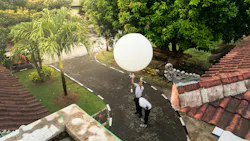
A radiosonde is an interesting weather forecasting tool that continues to be used after nearly a century. The device is a battery-powered telemetry instrument that’s carried into the atmosphere typically via a weather balloon, which measures various atmospheric conditions and transmits them by radio to a ground receiver. They can also be equipped with a variety of different equipment that helps them measure parameters such as altitude, pressure, temperature, relative humidity, wind speeds, and direction — and even cosmic ray readings at high altitudes.
Before radiosondes, weather forecasters back in the 19th century used kites equipped with meteographs. These recording devices measured pressure and temperature, and would be recovered after the experiment. As one could imagine, these were difficult to use, as the kites were tethered to the ground, which limits altitude and range, and were difficult to maneuver in gusty conditions. By the late 1800s, forecasters moved to equip meteographs to balloons, which provided increased altitudes and ranges. These balloons were the first to show researchers that temperatures dropped at higher altitudes, which also varied during the seasons.
The First Radiosonde
It wasn’t until 1929 that the first radiosonde, equipped with weather sensors, was invented by Robert Bureau (Fig. 1) of the National Meteorology Office of France. Nearly a year later, Russian meteorologist Pavel Molchanov flew his radiosonde, which would become widely used, as his design was simple and converted sensor readings before being sent via Morse code without the need for special equipment or training.
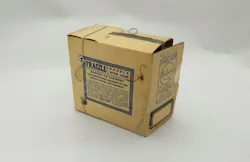
Over the next decade, the radiosonde would become equipped with the latest electric sensors, which allowed forecasters to measure atmospheric conditions at even higher altitudes than previous generations.
In1939, pioneer radioman Harry Diamond designed and built a ground-based radiosonde named the “remote weather station.” It allowed Diamond and his team to automatically collect weather data in remote and inhospitable locations.
A year later, the radiosonde system was equipped with a pressure drive that measured temperature and humidity as functions of pressure. It also gathered information on cloud thickness and light intensity. The system was so popular, hundreds of thousands of radiosondes were produced and used for research all over the U.S., and they were eventually adopted by the U.S. Weather Bureau.
Radiosondes are Out of This World
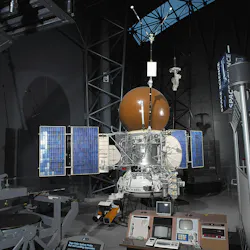
By the 1980s, radiosondes were no longer used for terrestrial research; they were being sent to other planets to measure and gather data. In 1985, the Soviet Union, via its Vega program (Fig. 2), sent the two Venus probes, Vega 1 and Vega 2, each of which dropped a radiosonde into the atmosphere of Venus. The sondes were tracked for two days. The two balloons were designed to float at 54 km from the planet’s surface and designed to gather data in the most active layer of the planet’s cloud system.
Today, meteorologists still employ radiosondes, even though we now have advanced weather satellites equipped with cutting-edge AI to forecast the weather. They’re robust, outfitted with the latest innovative technology, and can last for days, or even weeks, aloft in the atmosphere. They have been tethered to drones for precision navigation.
While satellites, aircraft, and ground sensors make up the bulk sources of garnering atmospheric data, none of those platforms can match the vertical resolution (30 m) and altitude coverage (30 km) of radiosonde observations. Thus, they remain essential to modern meteorology.
Radiosondes may have started as simple instruments hanging from weather balloons, but they have come a long way since the 1920s. What started as a way to send basic weather measurements back to the ground using radio eventually became an innovative platform capable of collecting and transmitting large amounts of atmospheric data. The technology has even been adapted for use beyond Earth, as shown by the Vega missions to Venus.
Though radiosondes have been updated with modern sensors, electronics, GPS, and digital communications, the basic idea remains the same: Send a small instrument into an environment that’s difficult to reach, collect useful data, then transmit it back to forecasters. Nearly a century later, that simple idea is still being utilized to understand the atmosphere around us and even the atmospheres of other worlds.
About the Author
 Cabe Atwell
Cabe Atwell
Technology Editor, Electronic Design
Cabe is a Technology Editor for Electronic Design.
Engineer, Machinist, Cartoonist, Maker, Writer. A graduate Electrical Engineer actively plying his expertise in the industry and at his company, Gunhead. When not designing/building, he creates a steady torrent of projects and content in the media world. Many of his projects and articles are online at element14 & SolidSmack, industry-focused work at EETimes & EDN, and offbeat articles at Make Magazine. Currently, you can find him hosting webinars and contributing to Electronic Design and Machine Design.
Cabe is an electrical engineer, design consultant and author with 25 years’ experience. His most recent book is “Essential 555 IC: Design, Configure, and Create Clever Circuits”
Cabe writes the Engineering Life & Engineering on Friday blog on Electronic Design.
See Cabe's cartoons & comic strips here.
Related
 weather_dreamstime_468300631
Comment About the Article
To join the conversation, and become an exclusive member of Electronic Design, create an account today!
 Leaders Logo
Leaders relevant to this article: