Chicago’s Iconic Weather Bell Set to Light Up Once Again
What you’ll learn:
- How Chicago's Weather Bell used colored lights to provide a simple weather forecast.
- How the original Weather Bell was controlled and why it became a familiar part of Chicago.
- How the iconic Weather Bell was restored and brought back to life using modern technology.
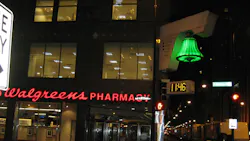
Before smartphones, weather apps, and digital signs tell us the weather forecast on any given day, people had to find other ways to get such information. One of the early ways to do that could once again be used for its intended purpose, and it's been hanging on a building in downtown Chicago for nearly 70 years. Known as the Weather Bell, the sign became an iconic, familiar part of the Chicago skyline and will be restored after sitting dark for years.
Located at 79 W Monroe Street, Chicago, Ill., the Weather Bell served to relay the time and weather by lighting up different colors, including green (for no change), red (warmer weather), gold (cold weather), and agitated (rain). The 14-story building itself, originally designed by architect Jarvis Hunt, was finished in 1906. An addition designed by Holabird & Roche was put into place a short time later and was occupied by several banking companies over the following years.
After Bell Savings & Loan moved into the building in 1951, it underwent a major modernization renovation. As part of that renovation, the company installed the large Weather Bell, which would become the building's most recognizable feature.
Color-Coded Weather
Beyond the color symbols, Bell created a little rhyme that people could use to remember what each color represented: “When Weather Bell is emerald green, No change in temperature is foreseen. When Weather Bell is glowing red, Warmer weather is ahead. When Weather Bell is gleaming gold, A temperature drop is foretold. When Weather Bell is in agitation, Prepare yourself for precipitation.”
As an interesting side note, the Bell was not an automatic device that changed color based on the weather; it was manually controlled from the basement of the building. Someone had to determine what the forecast called for and set the sign accordingly. Because of that, it wasn't always perfectly accurate, but that imperfection was part of the building’s charm.
The Weather Bell wasn’t limited to one building in a large city. It was also part of a larger trend in other cities as well. Weather balls, weather beacons, and other illuminated signs were installed on buildings around the country during the 1950s. Depending on the system, different colors and patterns were used to communicate changing weather conditions. Chicago's Weather Bell was one of these displays, and its large, illuminated shape helped make it well-known.
As technology advanced, the need for these illuminated weather-forecast objects was no longer necessary. Television weather reports became common, as were computerized forecasts, websites, smartphones, and weather apps. At the same time, the large, illuminated signs started to disappear from cities as newer technologies arrived. At some point, the Weather Bell stopped working and went dark for decades, but while it lost its illumination, it remained a city icon.
The building itself has also gone through several changes. The Rector Building was designated a Chicago Landmark, and it’s now being converted into residential space. The redevelopment is also bringing the Weather Bell back to life with its familiar glow illuminating the space around once more. However, it will now do so using modern technology behind the scenes.
The newest owners, R2 Companies, also state that not only is the Bell being restored, but it’s going to rehab the digital clock as well. The same with the building’s name, as it's being changed to “Bell Weather Residence,” as it has become a residential building.
Final Thought
The Weather Bell wasn’t as accurate or sophisticated as today's weather technology, but it was an early example of using electronics and visual displays to make weather information available to the public. More than 70 years after it first appeared, Chicago's Weather Bell is still doing something that technology has always been good at: Taking complicated information and making it easy for people to understand at a glance.
About the Author
 Cabe Atwell
Cabe Atwell
Technology Editor, Electronic Design
Cabe is a Technology Editor for Electronic Design.
Engineer, Machinist, Cartoonist, Maker, Writer. A graduate Electrical Engineer actively plying his expertise in the industry and at his company, Gunhead. When not designing/building, he creates a steady torrent of projects and content in the media world. Many of his projects and articles are online at element14 & SolidSmack, industry-focused work at EETimes & EDN, and offbeat articles at Make Magazine. Currently, you can find him hosting webinars and contributing to Electronic Design and Machine Design.
Cabe is an electrical engineer, design consultant and author with 25 years’ experience. His most recent book is “Essential 555 IC: Design, Configure, and Create Clever Circuits”
Cabe writes the Engineering Life & Engineering on Friday blog on Electronic Design.
See Cabe's cartoons & comic strips here.
Comment About the Article
To join the conversation, and become an exclusive member of Electronic Design, create an account today!
 Leaders Logo
Leaders relevant to this article: