A Divide-and-Conquer Approach for Fail-Safe Circuit Protection (Download)
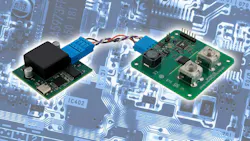
When it comes to power-path protection, timing is everything. A short circuit can develop in roughly 100 ns. If the fuse or other circuit-protection device can't react within that window, the protected circuitry is exposed to the full fault-energy and is frequently destroyed. That challenge becomes worse in industrial, automotive, and other systems that need to meet strict functional-safety requirements, including SIL 3 and ASIL D.
Traditionally, engineers addressed these requirements by delegating the safety function to a single component designed to fail in a predictable, nonhazardous way. One common example is the pyrotechnic fuse, which blows when overcurrent conditions are detected. Another approach involves the electromechanical contactor. It uses an electromagnetic coil to physically open internal contacts when exposed to excessive currents.