Deterministic intelligence: The next frontier for IC signoff and yield
Key Highlights
- How a hybrid strategy of deterministic engines and explainable AI ensures signoff reliability.
- Techniques for using AI to compress physical verification cycles through automated violation triage.
- The role of manufacturing digital twins in identifying and resolving yield-limiting patterns before production.

By Juan Rey
Senior Vice President, General Manager and CTO of the Calibre segment, Siemens EDA
Siemens Digital Industries Software
The semiconductor industry has reached a stage where traditional verification methodologies are being tested by the sheer scale of advanced process nodes. We are no longer just managing geometric constraints; we are navigating a landscape of billions of violations and complex multiphysics interactions. While Artificial Intelligence (AI) offers the computational throughput required to handle this data explosion, its adoption in production environments hinges on a single, non-negotiable factor: trust.
In high-stakes sectors like automotive, aerospace, and medical electronics, "black-box" automation—where an algorithm provides a result without a traceable rationale—is a liability. For AI to move from an experimental tool to a signoff-quality asset, it must be transparent, governable, and grounded in deterministic reality. The pressure to automate is intense, but in an industry where a single undetected flaw can cost millions in respins or field failures, speed without certainty is a dangerous trade-off. The answer lies in trustworthy, robust AI solutions that make real improvements, not just automation for its own sake.
The hybrid architecture: Determinism meets intelligence
The most effective path forward is not to replace proven EDA engines, but to augment them. At Siemens, we advocate for a hybrid approach that combines the precision of deterministic signoff engines with the pattern-recognition capabilities of modern AI. This architecture ensures that the "physics-aware" foundation of tools like Calibre remains intact, while AI layers provide the intelligence to navigate the results.
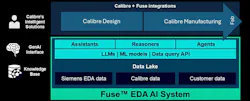
Figure 1: Integrating AI with deterministic engines allows for accelerated signoff without sacrificing the certainty required for foundry compliance.
Central to this strategy is the Fuse EDA AI system, illustrated in Figure 1, which acts as a domain-scoped foundation for generative and agentic AI. By using a multimodal EDA-specific data lake, Fuse can parse and understand the complex design context that general-purpose AI models miss. This enables a "Retrieval-Augmented Generation" (RAG) approach where AI-driven recommendations are continuously validated against the deterministic rule decks and foundry requirements that define signoff quality.
For example, in physical verification, AI can be used to perform automated violation triage. Instead of an engineer manually reviewing thousands of statistically similar DRC violations, the AI surfaces meaningful signals, allowing the team to focus on root-cause analysis rather than data sorting. By identifying statistically meaningful signals within billions of violations, design teams report reducing debug time from days to hours. The AI never makes autonomous decisions, but it surfaces the right information at the right time for the engineers. When embedded within trusted verification solutions, the AI gains access to specific institutional knowledge and design context, so engineers can interrogate signals using natural language to accelerate root-cause analysis. This "engineer-in-the-loop" model ensures that AI empowers the designer rather than creating an opaque dependency.
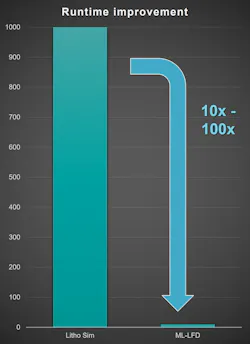
Figure 2: AI-driven manufacturing tools must provide quantifiable confidence metrics, allowing engineers to audit and validate results before they impact the fab floor.
Closing the loop in manufacturing
The trust requirement is perhaps even more acute in the manufacturing phase, where yield optimization directly dictates production economics. Here AI-driven lithographic simulations, for example, can achieve 10x to 100x runtime improvements (Figure 2). However, speed is only valuable if the results are defensible.
In the fab, AI must be fast but also defensible. Machine learning algorithms can dramatically accelerate the simulation of complex optical and chemical processes, but these tools must provide the transparency needed for an engineer to act. By utilizing a "manufacturing digital twin" approach, AI can identify yield-limiting patterns that might pass standard DRC but pose risks in actual production. This "Shift Left" capability allows designers to catch yield-limiting patterns before tapeout, reducing costly mask revisions and production delays.
The key is transparency: the system must quantify how strongly a violation belongs to a specific signal, enabling engineers to make data-driven decisions with full visibility into the AI’s reasoning. These capabilities transform AI from a productivity tool into a strategic asset for managing manufacturing risk and accelerating process ramp. By providing a defensible audit trail, AI-enhanced manufacturing tools allow foundries to adopt new process nodes with greater confidence and lower economic risk. This transparency imperative is what transforms AI from an experimental capability into a production-ready strategic asset.
Governance and Strategic Value
For the creators of semiconductor to fully embrace AI, they must maintain total control over their institutional data. Trustworthy AI platforms must be built on principles of data sovereignty and IP protection. This means transparency by design, where AI recommendations are auditable and explainable, and an engineer-in-the-loop workflow that lets the designer override or refine results based on domain expertise.
Beyond individual tool performance, the strategic value of transparent AI extends to organizational capabilities. When engineering teams can trust AI-surfaced patterns, they make faster decisions with greater confidence. When AI systems operate with clear context, they preserve institutional knowledge rather than creating opaque dependencies. This is especially critical for organizations in regulated industries—automotive, aerospace, medical devices—where a governance architecture is the foundation that makes AI deployment possible while meeting compliance requirements for traceability and auditability.
Effective AI platforms must also provide strong IP protection. Designers need total control over how and where AI is applied, ensuring that proprietary design data and fab-specific recipes are never leaked or used to train external models without explicit consent. This governance is not just a security requirement; it is the business case for AI adoption.
Conclusion: The future of trusted signoff
The strategic question for the semiconductor industry is no longer *if* AI will be used, but *how* it will be governed. By bridging the gap between autonomous speed and deterministic certainty, we can compress design cycles from months to weeks while maintaining the rigorous standards that have always defined our industry.
Looking ahead, AI will become a predictive engine for the entire design lifecycle. This vision requires an interconnected intelligence layer running across the whole flow, where general reasoning is continuously validated by deterministic verification engines. Manufacturers will see yield gains through earlier intervention and continuous learning on the fab floor, while design teams will balance performance, power and cost with unprecedented precision. The future belongs to those who can move fast, but only because they move with confidence. Trusted, explainable AI is the bridge that will allow us to cross the complexity inflection point and enter a new era of semiconductor innovation.
For more information, please download the white paper “How AI is transforming IC signoff and manufacturing”.
