Power Play: Collab Focuses on Power Solution for Advanced Computing Apps
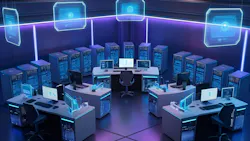
Wise Integration SAS will pair its expertise in digital control for wide-bandgap-based power converters with Navitas Semiconductor’s next-generation gallium-nitride (GaN) and silicon-carbide (SiC) power semiconductors. The two companies intend to collaborate on advancing power-computing applications for AI PCs, high-end workstations, desktop computers for gamers, and industrial systems.
The companies will focus on AI data center power-supply units (PSUs) and exploration of additional power-conversion topologies to address high-voltage, high-power, and high-efficiency applications from grid to chip.
Solutions for AI Data Center PSUs and Next-Generation Computing
AI data centers and performance computing applications are driving significant growth in energy demand and creating new requirements for efficiency, power density, and system performance. In AI data center PSUs and energy infrastructure, these requirements also make it necessary to deploy new power-conversion architectures to deliver higher efficiency and power density.
“AI data centers and performance computing applications are creating unprecedented need for solutions that deliver higher efficiency and better power density, said Vipin Bothra, vice president, global solution marketing at Navitas. “By combining Navitas’ next-generation GaN and SiC power technologies with Wise Integration’s digital-control expertise, we can deliver solutions that help customers address these rapidly evolving system requirements.”
About the Author
 Lee Goldberg
Contributing Editor
Lee is the author of the popular PowerBites series.
Lee Goldberg is a self-identified “Recovering Engineer,” Maker/Hacker, Green-Tech Maven, Aviator, Gadfly, and Geek Dad. He spent the first 18 years of his career helping design microprocessors, embedded systems, renewable energy applications, and the occasional interplanetary spacecraft. After trading his ‘scope and soldering iron for a keyboard and a second career as a tech journalist, he’s spent the next two decades at several print and online engineering publications.
Lee’s current focus is power electronics, especially the technologies involved with energy efficiency, energy management, and renewable energy. This dovetails with his coverage of sustainable technologies and various environmental and social issues within the engineering community that he began in 1996. Lee also covers 3D printers, open-source hardware, and other Maker/Hacker technologies.
Lee holds a BSEE in Electrical Engineering from Thomas Edison College, and participated in a colloquium on technology, society, and the environment at Goddard College’s Institute for Social Ecology. His book, “Green Electronics/Green Bottom Line - A Commonsense Guide To Environmentally Responsible Engineering and Management,” was published by Newnes Press.
Lee, his wife Catherine, and his daughter Anwyn currently reside in the outskirts of Princeton N.J., where they masquerade as a typical suburban family.
Related
 Infineon_AI_Power_Supply_Promo


Comment About the Article
To join the conversation, and become an exclusive member of Electronic Design, create an account today!
 Leaders Logo
Leaders relevant to this article: