USB-controlled PLL synthesizers offer 25-MHz to 27-GHz bandwidths


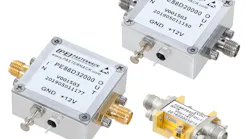
Pasternack’s six new models of PLL frequency synthesizers cover a range of frequency bands from 25 MHz to 27 GHz. The compact and rugged SMA-connectorized designs support a USB 2.0 interface with a PC that supplies DC power and GUI command control. Models offer high output power levels that range from +10 dBm to +19 dBm typical, and output attenuation is adjustable up to 50 dB in 1 dB steps. Phase locked speed is 1 ms typical, and phase noise is as low as -108 dBc/Hz at 100-MHz offset.
Additional features include a 50-MHz internal frequency source and optional external reference with supplied cable. Frequency resolution can be adjusted using either integer (default) or fractional modes with resolution to a step size down to 1 MHz. Modules support functional LED indicators that confirm a USB connection, phase locking and unlocking, and RF power disable. All models are RoHS and Reach compliant and are classified as EAR99. A comprehensive user manual and VISA-compliant software package can be downloaded from the Pasternack website.
“Pasternack’s six new models of USB-controlled PLL frequency synthesizers offer a wealth of desirable features for designers and are ideal for test-and-measurement applications. Each model comes complete with accessory cables, downloadable user manual, and command control software that’s ready to ship direct from stock with no MOQ,” said Tim Galla, active component product manager at Pasternack.
About the Author
 Rick Nelson
Contributing Editor
Rick Nelson is a technical journalist who has served as executive editor of Test & Measurement World, chief editor of EDN, and executive editor of EE-Evaluation Engineering. He has also contributed to publications including Vision Systems Design and Electronic Design, and he has participated in many live panel discussions and webcasts. Rick has also held systems-engineering and product-development positions at General Electric and Litton Industries. He received his B.S.E.E. degree from The Pennsylvania State University.

Comment About the Article
To join the conversation, and become an exclusive member of Electronic Design, create an account today!
 Leaders Logo
Leaders relevant to this article: