AI Accelerates Physics Simulations
What you’ll learn:
- Why traditional simulation workflows are too slow.
- How continuously computed physics can make previously impractical tradeoffs routinely accessible during design.
- How Vinci is able to attain this type of speed up.
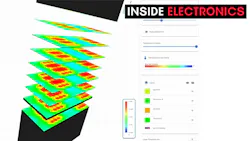




Simulations abound in all forms of design, from aircraft to chiplet-based system-on-chips (SoCs). It’s too expensive to live by trial-and-error, but simulations can require lots of time and hardware to enable the software to return the final evaluation.
In this episode of Inside Electronics, I talk with Vinci CEO Hardik Kabaria. Vinci’s solutions can speed up physical simulations by a factor of 1000 using AI techniques (see figure).
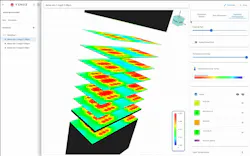
Faster simulation can significantly impact the design cycle, and it’s not just shortening the time to get results. A shorter timeframe means more simulations can be performed. In addition, responses are provided sooner so that developers can ask and respond to results in real-time rather than queueing up jobs to run overnight.
How this works and the overall impact of Vinci is part of our discussion.
SHOW NOTES
01:20 – Vinci’s Physics Intelligence Layer
05:39 – Integrating AI into Simulation
08:32 – Using GPUs to Enhance Performance
10:40 – Resolution vs. Performance
12:40 – How Software Handles Real-Time Applications
15:58 – Challenges for New Customers
19:15 – Adapting for Other Industries
About the Author
 William G. Wong
William G. Wong
Senior Content Director - Electronic Design and Microwaves & RF
I am Editor of Electronic Design focusing on embedded, software, and systems. As Senior Content Director, I also manage Microwaves & RF and I work with a great team of editors to provide engineers, programmers, developers and technical managers with interesting and useful articles and videos on a regular basis. Check out our free newsletters to see the latest content.
You can send press releases for new products for possible coverage on the website. I am also interested in receiving contributed articles for publishing on our website. Use our template and send to me along with a signed release form.
Check out my blog, AltEmbedded on Electronic Design, as well as his latest articles on this site that are listed below.
You can visit my social media via these links:
- AltEmbedded on Electronic Design
- Bill Wong on Facebook
- @AltEmbedded on Twitter
- Bill Wong on LinkedIn
I earned a Bachelor of Electrical Engineering at the Georgia Institute of Technology and a Masters in Computer Science from Rutgers University. I still do a bit of programming using everything from C and C++ to Rust and Ada/SPARK. I do a bit of PHP programming for Drupal websites. I have posted a few Drupal modules.
I still get a hand on software and electronic hardware. Some of this can be found on our Kit Close-Up video series. You can also see me on many of our TechXchange Talk videos. I am interested in a range of projects from robotics to artificial intelligence.
 Hardik Kabaria
Hardik Kabaria
CEO and Co-Founder, Vinci
Hardik Kabaria is the co-founder and CEO of Vinci, a frontier lab building systems that make physical reality continuously computable.
While software has become programmable, physics has remained episodic — accessed through discrete simulations and approximations. Vinci is changing that. Under Kabaria’s leadership, the company is building the first system in what's emerging as continuous physics infrastructure, where physics is no longer simulated but continuously computed.
At its core is a deterministic, solver-grounded physics foundation model that operates directly on manufacturing geometry without reliance on customer data. The system is already embedded inside semiconductor engineering workflows, continuously computing thermal and mechanical behavior as designs evolve.
This eliminates simulation as a gating event in engineering workflows, shifting physics from a bottleneck to an always-on constraint, and enabling companies to reach manufacturable, high-yield designs in fewer cycles.
Kabaria previously led software at Carbon and holds a Ph.D. from Stanford.
Comment About the Article
To join the conversation, and become an exclusive member of Electronic Design, create an account today!
 Leaders Logo
Leaders relevant to this article: