Build It Twice: What Two Host Machines Reveal About Your Embedded Toolchain
A Test Every Embedded Team Should Run
Take a project you actually ship. Check out one commit onto a Linux host and the same commit onto a Windows host. Build both. Flash both. Attach a debug probe to both. Then sit down with the two sets of results next to each other and look for anything that does not match.
Engineers run this kind of comparison instinctively when a board acts up. Almost nobody runs it against their own toolchain, because the outcome has been assumed for so long that checking felt pointless. It is worth checking now, because the answer has changed for some tools and not for others, and the difference between those two groups is about to matter on your next project.
What Can a Two-Host Build Comparison Reveal About Your Embedded Toolchain?
Five things are worth comparing, and each failure points at something specific:
- The binaries. Not just "both built cleanly." Compare the images. A difference here means the host OS is an input to code generation, which means your reproducibility story has a variable in it that is not in version control.
- The debug session. Can you get ETM trace on both? Can you read registers and watch variables live without halting the core? Do RTOS-aware task views come up? A trace window that works on one host and degrades on the other tells you the second host got a compiler, not a debugger.
- The static analysis findings. Run the same MISRA C/C++ and CERT C/C++ checks on both. A rule that fires in one environment and stays quiet in the other is not a minor discrepancy. It is two different views of whether your code is compliant.
- The build invocation. Did the existing CMake structure build as-is on both, Zephyr and west setups included, or did one host need the project recreated in a proprietary format first? A conversion step is a second source of truth, and second sources of truth drift.
- The certification evidence. Does the qualification package cover both host environments, or does it name one? This is the check teams discover last and need first.
If all five come back clean, the host OS is genuinely a preference in your organization. If any of them do not, the host OS is a technical constraint, and everything downstream of it has been quietly built on top of that constraint for years.
Why Do Linux and Windows Embedded Builds Still Produce Different Results?
Almost every other variable in embedded software development got brought under control over the last decade. Build definitions moved into CMake and out of IDE-specific project files. Containers gave CI and local development the same image to work from. Library versions got pinned. Compiler flags went into version control alongside the code they affect.
The one layer that did not move is the one carrying the most weight: the trusted IDE with the certified compiler, debugger, and analysis engine. It stayed tied to a single host OS, usually Windows, not because anyone defended that decision but because nobody wanted to touch it.
The reason it remained largely unchallenged for so long is that the surrounding ecosystem grew up around it. Silicon vendor qualified libraries assume it. The Microcontroller Abstraction Layer assumes it. Swapping that layer out to gain a second host OS was never a trade worth making, so teams worked around it instead, and the workaround became the architecture.
The Hidden Cost of a Single-OS Embedded Toolchain
The gap between the two hosts is not an inconvenience that lives with one developer. It shows up on the program budget in four ways, in rough order of how easy they are to quantify.
• Debug time, which is the largest single line item. Research from Jacob Beningo puts debugging at roughly 40% of total project engineering time. Trace depth and RTOS-aware views are what move that number, and a conservative 25% improvement in debug efficiency translates to a 10% reduction in total engineering effort. When those capabilities exist on only one host, teams either give them up or route every difficult bug through whoever has the right machine.
• The workarounds nobody signed off on. Standardize on Linux for CI and local work, keep the certified IDE on Windows, and something has to bridge the two. A VM appears. Or WSL. Or a shared machine that half the team remotes into. None of it is in the tool qualification record, all of it is load-bearing, and the first time a local build behaves differently from CI you are debugging your infrastructure instead of your firmware.
• Re-qualification you did not budget for. Silicon vendor diversification and second sourcing are now normal practice, but changing MCU vendor tends to restart toolchain qualification close to zero: compiler, linker, and analysis tools included, even when the application code barely moved. That cost is attached to the tooling, not the product.
• The candidates you never interview. Two engineers can write identical bare-metal or RTOS-based C/C++ firmware for the same target and still come from different hiring pools depending on which OS they work in. Electronic Design's own salary and career survey found 77% of organizations struggling to find qualified engineering candidates, with embedded named specifically by 43%, and the trend for embedded has continued in the wrong direction. Narrowing that pool by host OS is a constraint the organization chose, even if nobody remembers choosing it.
What a True Cross-Platform Embedded Toolchain Actually Requires
"Cross-platform" is claimed broadly and delivered narrowly. Some vendors put an emulation or compatibility layer over the same Windows-only engine. Others have not addressed a second host at all. This is exactly the challenge IAR designed to solve within the IAR Platform. Getting a clean two-host diff on a safety-critical project requires three distinct things, and all three have to hold at once.
One: the hard parts have to run natively, not through a shim.
Trace is the honest test here, because it is the one thing that cannot be faked with a compatibility layer. It depends on a real-time relationship with the probe: driver stacks, USB and JTAG connectivity, and buffering fast enough to keep pace with the target. ETM trace, live register and watch visibility without halting the core, and RTOS-aware task views have to be present on Linux in the same form they take on Windows.
Two: what sits underneath both hosts has to be the same engine, not a shared front end.
Identical code generation is what makes binaries comparable, and it is also what allows TÜV SÜD certification (ISO 26262, IEC 61508, IEC 62304, across Arm, RISC-V, and Renesas architectures) to travel with you rather than stopping at the host boundary. The same principle applies to analysis: one certified engine, surfaced through the Language Server Protocol so violations appear as the line is typed with a quick fix where one exists, in whichever editor the developer prefers, on either host. One engine, two hosts, one set of findings. Within the IAR Platform, that shared foundation is what allows developers to move between Linux and Windows without introducing a second analysis workflow, a second certification story, or a second interpretation of the codebase.
Three: nothing should have to be maintained twice.
A certified toolchain that attaches to an existing CMake project as-is removes the duplicate project definition and the drift that comes with it. "Stop fighting our build system" is feedback IAR has heard directly from customers, and it is the same instinct behind the request for modern language support: C++20 by default, with broad standard-library coverage through Libc++, so nobody has to check what the toolchain covers before using it.
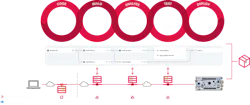
Figure 1. A two-host strategy only creates value when the surrounding workflow remains consistent. Build automation, static analysis, on-target testing, and deployment should run from the same project definition across Linux, Windows, CI runners, and target hardware.
IAR Embedded Workbench now runs natively on Linux and Windows as a cross-platform IDE within the IAR Platform, which is what makes the two-host diff a fair test rather than a foregone conclusion. Within the IAR Platform, the compiler, debugger, static analysis, build integration, and safety certification evidence travel together across hosts. The result is not simply a Linux version of an IDE, but a single development environment that preserves reproducibility, debug visibility, and compliance regardless of where developers choose to work.
Should Host OS Choice Still Be a Constraint in Embedded Development?
The point of building it twice is not to find a defect. It is to turn something implicit into something written down.
Right now, for most teams, the host OS is the only significant input to a safety-critical build that never appears in a review, never gets a line in the qualification record, and never gets revisited. Run the comparison, record what matched and what did not, and the constraint stops being invisible. Then it can be argued about, scheduled, and removed like any other piece of technical debt, rather than surfacing during an audit or in the middle of a vendor transition.
If you would rather see the three layers working together before running the test yourself, the IAR Platform demo covers trace depth, cross-host reproducibility, and the shared analysis engine in a single session. Start here.