How to Handle End-to-End, Full System Simulation
What you’ll learn:
- Why do we need to do full system simulation?
- Why doing end-to-end, full system simulation is hard.
- How does AI help with handling full system simulation?
If you press a button to perform an action within a specified timeframe, it might be useful to perform simulation before building the system. This might be a simple task if it’s just a matter of a switch, some wires, a power supply, and a light bulb. However, it gets increasingly challenging when the system is more complex, possibly with an AI model running on a couple of GPUs are added to the mix.
Doing end-to-end, full system simulation is hard because of all the variables involved. Trying to do a detailed simulation can take lots of time and computational resources for more complex systems, but it’s good to make sure something works before building the physical device.
I talked with Deepak Shankar, Founder of Mirabilis Design, about the company’s VirtualSim tools that are designed to handle this type of end-to-end, full system simulation. Part of the solution is what to simulate and to what level of accuracy, which can vary depending on the application and implementation. This is important if you want to run a large number of simulated tests in a short period of time, such as hours instead of days.
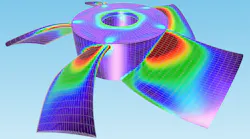
Mirabilis Design’s VisualSim is also designed to handle different types of simulations using different system-level components from antennas to LPDDR memory, including thermal simulation support. Artificial-intelligence models help to streamline simulations and testing. VisualSim Cloud provides on-demand support via a browser.
About the Author
 William G. Wong
Senior Content Director - Electronic Design and Microwaves & RF
I am Editor of Electronic Design focusing on embedded, software, and systems. As Senior Content Director, I also manage Microwaves & RF and I work with a great team of editors to provide engineers, programmers, developers and technical managers with interesting and useful articles and videos on a regular basis. Check out our free newsletters to see the latest content.
You can send press releases for new products for possible coverage on the website. I am also interested in receiving contributed articles for publishing on our website. Use our template and send to me along with a signed release form.
Check out my blog, AltEmbedded on Electronic Design, as well as his latest articles on this site that are listed below.
You can visit my social media via these links:
- AltEmbedded on Electronic Design
- Bill Wong on Facebook
- @AltEmbedded on Twitter
- Bill Wong on LinkedIn
I earned a Bachelor of Electrical Engineering at the Georgia Institute of Technology and a Masters in Computer Science from Rutgers University. I still do a bit of programming using everything from C and C++ to Rust and Ada/SPARK. I do a bit of PHP programming for Drupal websites. I have posted a few Drupal modules.
I still get a hand on software and electronic hardware. Some of this can be found on our Kit Close-Up video series. You can also see me on many of our TechXchange Talk videos. I am interested in a range of projects from robotics to artificial intelligence.
Deepak Shankar
Founder, Mirabilis Design
Deepak Shankar, founder of Mirabilis Design, has over two decades of experience in management and marketing of system-level design tools. Prior to establishing Mirabilis Design, he was Vice President, Business Development at MemCall, a fabless semiconductor company and SpinCircuit, a joint venture of Hewlett-Packard, Flextronics, and Cadence. He started his career designing network simulators for the U.S. Federal Agencies, and managing discrete-event simulators for Cadence.