Boot Drives Deserve a Bigger Role in the AI Infrastructure Mix

Boot storage is a critical element in system uptime, recovery speed, and fleet efficiency, making it a strategic decision point for AI-era data centers.

What you’ll learn:

  • Why boot drives are central to AI data center uptime, resilience, and fleet efficiency rather than just a startup component.
  • The performance requirements, low latency, high IOPS, endurance, and security that boot storage must meet in AI environments.
  • How Silicon Motion's enterprise PCIe NVMe boot SSDs address the demands of modern AI infrastructure, including rapid boot cycles, reprovisioning, and large-scale manageability.
As AI infrastructure grows, most of the attention naturally goes to GPUs, high-speed networking, and large-scale storage. But one essential part of the system is often treated as an afterthought: the boot drive.

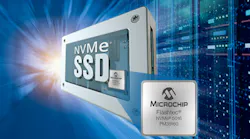
In cloud and enterprise AI environments, boot drives do much more than start a server (Fig. 1). They help determine how quickly systems come online, rejoin a cluster, and return to active workloads after maintenance or failure. That makes them central to uptime, resilience, and overall fleet efficiency.

This is why boot storage has become a strategic issue for AI-era data centers. Modern AI systems are no longer simple server deployments. They bring together CPUs, GPUs, accelerators, orchestration software, networking, and distributed storage across large and complex environments. The boot drive supports trusted boot, system initialization, configuration management, and the reliable startup of the services that keep the platform running.

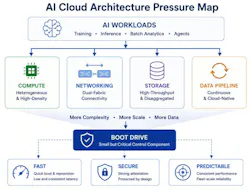
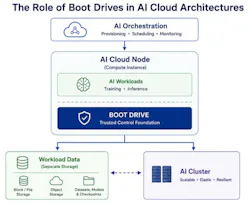
AI workloads also put new pressure on cloud infrastructure (Fig. 2). Providers need to bring nodes online quickly, recover from failures without delay, and keep behavior consistent across thousands of systems. To do that, boot drives require low latency, high IOPS, strong endurance, and dependable security. When boot storage slows down, the effects show up quickly: longer recovery times, lower GPU utilization, and higher operating costs.

In Silicon Motion’s latest whitepaper, the company makes the case that boot drives in AI data centers should be PCIe NVMe solid-state disks (SSDs). Compared with mechanical drives, SSDs deliver the speed and consistency needed for rapid boot cycles, frequent reprovisioning, and continuous management activity. They also help maintain predictable performance in environments where even short delays can affect orchestration and cluster availability.

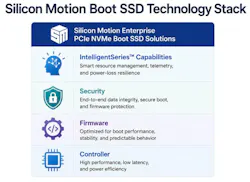
Silicon Motion's enterprise PCIe NVMe boot SSD solutions are built for these AI infrastructure demands (Fig. 3). Their controller and firmware capabilities are designed to support fast, predictable boot performance; power-loss resilience; secure boot; and large-scale manageability. For cloud providers operating at scale, these aren’t optional extras. They’re part of the operational foundation that keeps AI systems secure, efficient, and available.

In today's AI data centers, the boot drive isn’t a commodity. It’s a control point. High-capacity storage may serve data and model workloads, but boot storage anchors the system's state, identity, and ability to recover. That role becomes even more important as AI factories become more distributed, more heterogeneous, and more dependent on automation.

For AI infrastructure teams, the takeaway is clear: boot drives should be chosen for IOPS, reliability, endurance, and security, not just capacity. That decision has a direct impact on uptime and service quality. If you’re building or operating AI infrastructure, the boot drive is no longer a background component. It’s a foundational part of AI platform performance.

Reference

  • Silicon Motion whitepaper on boot drives in AI data centers: “Boot Drive Requirements in Cloud AI Architectures” (referenced in the article as "our latest whitepaper"; download linked via the CTA).

About the Author

Lancelot Hu

Lancelot Hu

Senior Director of Automotive & Embedded Solution Line of Business, Silicon Motion

Lancelot Hu leads Silicon Motion’s Automotive and Embedded Solutions business and brings over 17 years of experience in product planning, marketing, and program management across the NAND storage and industrial PC (IPC) industries.

Drawing on his extensive expertise in high-reliability storage and embedded systems, he also drives the product planning and market development of Enterprise Boot Drive solutions, addressing the needs of enterprise servers, DPUs, networking equipment, and AI storage nodes for low-latency, highly reliable, secure, and stable boot storage. He also leads the development of automotive and embedded storage solutions and automotive-grade controller products, working closely with leading car OEMs and Tier 1 suppliers.

Sign up for our eNewsletters
Get the latest news and updates

Comment About the Article

To join the conversation, and become an exclusive member of Electronic Design, create an account today!