How To Control Brushless Motors (Part 4): Current Control (Download)
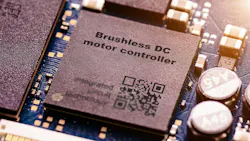
In brushless DC (BLDC) motors, the current controller assumes one of the most important roles: It ensures that the commanded values for each motor winding — output by the commutation module — results in the right amount of current flowing through those windings. By directly regulating current, it’s possible to more precisely control the behavior of the BLDC motor, enabling higher performance and efficiency.
One of the main advantages of current control is its ability to prevent potentially dangerous overcurrent conditions, particularly when the motor isn’t yet moving. To achieve high spin rates and fast acceleration, the coils of BLDC motors often have low resistance values. Without a current-control scheme, applying the motor-drive voltage when the motor is at a standstill might generate a large and damaging current spike.
