“Pressure” Review: The Weather Forecast that Changed D-Day
What you’ll learn:
- How 1940s meteorologists forecasted the weather using ships, weather stations, balloons, and hand-drawn weather maps to launch the Normandy invasion.
- Why accurate weather forecasting became one of the key factors in its success
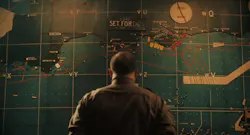
The 2026 movie Pressure is a powerful movie that details just one piece of the D-Day invasion puzzle, albeit a very important piece that may surprise some moviegoers. Operation Overlord was to be launched on June 5, 1944, a full 24 hours before the famous Normandy landings that were carried out on the following day, June 6, 1944, as the weather had other plans and severe storms made the initial invasion impossible.
The Allies had war-gamed the invasion with catastrophic outcomes that killed over 700 military personnel, and as a result, Allied leaders planned the invasion down to the most minute details. Like a well-oiled machine, if any one part fails, the entire machine fails.
Spoilers after this point. Beware.
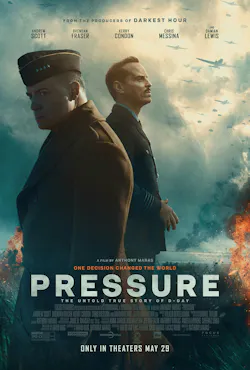
The wargames rattled U.S. General Dwight D. Eisenhower (played by Brendan Fraser), so he convened with British General Bernard Montgomery (played by Damien Lewis), and Royal Navy Admiral Bertram Ramsay (played by Robert Portal), and decided that to lessen casualties they needed control of every detail. This included everything from inflatable decoys used to deceive the Axis to the optimal tides and phase of the moon for the troop landings on Omaha Beach. But as with any plans, there’s always the unknown, and in this case, that unknown variable was the weather.
Weather Woes
Clear weather was needed for a successful invasion, as rough seas would prevent amphibious landing ships from reaching shore and planes from deploying airborne troops and carrying out bombing runs. Meteorological forecasting was still primitive in the 1940s, something we take for granted today simply by looking at our phones.
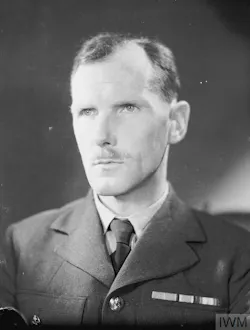
In the movie, the American meteorologist had assured Eisenhower that skies would be clear for that crucial day. But his British counterpart, Captain James Stagg (played by Andrew Scott) (Fig. 1), predicted storms and would only say they were likely, as he didn’t have definitive proof otherwise and getting it wrong would cost thousands of lives.
The movie’s title Pressure doesn’t refer to just the enormous amount of difficulty of planning involved, but to the barometric indicators being tracked by the team of meteorologists around the globe.
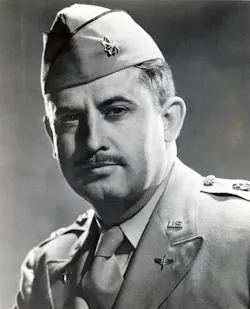
In the movie, the American forecaster Irving Krick (played by Chris Messina) (Fig. 2) isn’t happy when Captain Stagg is assigned by Winston Churchill to Allied headquarters to oversee their weather forecasting endeavors. Krick had developed an innovative system based on analog days, which involved identifying past weather patterns that closely resembled current atmospheric conditions and then predicting that the future weather would follow a similar path as it did in the past.
Stagg, on the other hand, collects data from observation posts around the world to track the direction of storms that are currently active, and he focuses on two that are likely to interfere with the invasion.
Operation Overlord required key requisites to be pulled off for it to work — it needed a low tide, moonlight, acceptable winds, limited cloud cover, and manageable seas, meaning that the weather forecast needed to be precise. To accomplish that feat, the meteorologists garnered data from weather stations, observers, ships and merchant vessels, radiosondes, pilot balloons, and aircraft from all over the globe.
Modeling the Weather
Temperature, humidity, pressure, wind speeds, and directions at different altitudes were used to predict one piece of the weather puzzle. Surface weather maps, drawn by hand from the garnered data, were another, along with Norwegian cyclone models that provided warm fronts, cold fronts, and occlusions.
Instead of computers, the meteorologists used pencils, graph paper, pressure charts, analog calculations, and experience to model weather. Stagg and Krick combined their talents and produced an accurate weather forecast that would push the invasion day to June 6, 1944, saving countless lives in the process.
Today, weather forecasts are produced by satellites, Doppler radar, supercomputers, and numerical prediction models capable of analyzing billions of atmospheric datasets every day. That said, the success of Operation Overlord was determined decades before those technical marvels even existed, when meteorologists pieced together observations from ships, balloons, aircraft, and weather stations to predict a brief break in the storm.
Pressure serves as a testament to one of history's most important military decisions that depended not only on strategy, but on the science and technology of weather forecasting.
I didn’t know a movie about meteorologists would be so good. So educatiuonal to boot.
I give it a 5.00 out of 5.00. An absolute must watch.
About the Author
 Cabe Atwell
Technology Editor, Electronic Design
Cabe is a Technology Editor for Electronic Design.
Engineer, Machinist, Cartoonist, Maker, Writer. A graduate Electrical Engineer actively plying his expertise in the industry and at his company, Gunhead. When not designing/building, he creates a steady torrent of projects and content in the media world. Many of his projects and articles are online at element14 & SolidSmack, industry-focused work at EETimes & EDN, and offbeat articles at Make Magazine. Currently, you can find him hosting webinars and contributing to Electronic Design and Machine Design.
Cabe is an electrical engineer, design consultant and author with 25 years’ experience. His most recent book is “Essential 555 IC: Design, Configure, and Create Clever Circuits”
Cabe writes the Engineering Life & Engineering on Friday blog on Electronic Design.
See Cabe's cartoons & comic strips here.
Comment About the Article
To join the conversation, and become an exclusive member of Electronic Design, create an account today!
 Leaders Logo
Leaders relevant to this article: