ROS: Robot Operating System
This TechXchange focuses on the Robot Operating System (ROS). The latest open-source version is ROS 2.
Despite the name, ROS is not, in fact, an operating system. Rather, it’s a SDK (software development kit) that provides the building blocks you need to build your robot applications. Whether your application is a class project, a scientific experiment, a research prototype, or a final product, ROS will help you to achieve your goal faster. — ros.org
As noted, ROS isn't an operating system but it runs atop one, typically Linux or Microsoft Windows. Since it's open source, it can easily work with almost any operating system or RTOS. ROS 2 is built on the Object Management Group's (OMG) Data Distribution Service (DDS) standard, so it does require a DDS implementation. The advantage with DDS is it can link to DDS nodes that aren't necessarily running a full ROS stack. Micro-ROS is a ROS subset designed for resource-constrained platforms like microcontrollers.
ROS 2 is the basis of many robotic projects and products, from rolling robots to drones and even robot swarms. It's part of the Open Robotics project.
 open book
Are You Using ROS 2?
Let us know. Take this short poll.
ROS Resources and Links
Here are some useful links to ROS resources on the internet.
- ROS.org
- Getting Started with ROS
- Related organizations:
- ROS 2 and Docker
- Micro-ROS for resource constrained platforms (Github)

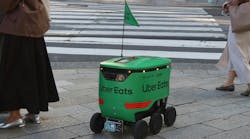 mobilerobot_dreamstime_l_314282258
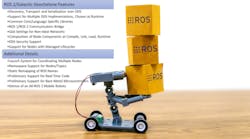 Sompong Sriphet Dreamstime L 138547722newest
 Robotics Dreamstime Kunnicha Luengrungwaree 195994310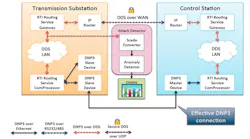
Micro-ROS for Resource-Constrained Platforms
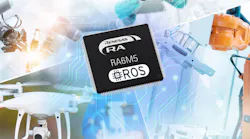
Micro-ROS is firmware designed for resource-constrained systems like microcontrollers that don't have the memory or horsepower to run a full ROS 2 stack. eProsima supports Micro-ROS as well as high-performance, safety-critical DDS implementations.
This section addresses Micro-ROS and its relationship to ROS.
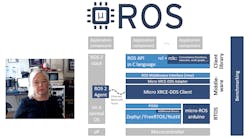
micro-ROS puts the Robot Operating System on Microcontrollers
eProsima put together this short overview of micro-ROS.
ROS 2 Examples and Implementations
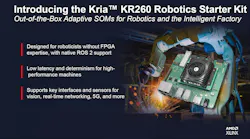
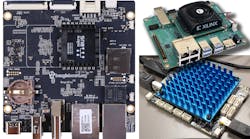
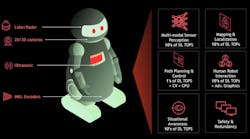
ROS is an open-source platform, but getting it to work with hardware can be a challenge. A number of platforms, development kits, etc., are designed to support and utilize ROS 2, primarily for robotic applications.
Here are some robotic uses and implementations using ROS 2.
Automotive ROS 2
Software-defined vehicles (SDVs) and self-driving cars are robots on wheels. These articles look at how ROS 2 is being used in automotive applications. Companies like Apex.ai provide ROS and ROS-based support, making it compatible with automotive safety and security requirements.



 id_38307812__cammeraydave__dreamstime
About the Author
 William G. Wong
William G. Wong
Senior Content Director - Electronic Design and Microwaves & RF
I am Editor of Electronic Design focusing on embedded, software, and systems. As Senior Content Director, I also manage Microwaves & RF and I work with a great team of editors to provide engineers, programmers, developers and technical managers with interesting and useful articles and videos on a regular basis. Check out our free newsletters to see the latest content.
You can send press releases for new products for possible coverage on the website. I am also interested in receiving contributed articles for publishing on our website. Use our template and send to me along with a signed release form.
Check out my blog, AltEmbedded on Electronic Design, as well as his latest articles on this site that are listed below.
You can visit my social media via these links:
- AltEmbedded on Electronic Design
- Bill Wong on Facebook
- @AltEmbedded on Twitter
- Bill Wong on LinkedIn
I earned a Bachelor of Electrical Engineering at the Georgia Institute of Technology and a Masters in Computer Science from Rutgers University. I still do a bit of programming using everything from C and C++ to Rust and Ada/SPARK. I do a bit of PHP programming for Drupal websites. I have posted a few Drupal modules.
I still get a hand on software and electronic hardware. Some of this can be found on our Kit Close-Up video series. You can also see me on many of our TechXchange Talk videos. I am interested in a range of projects from robotics to artificial intelligence.
Comment About the Article
To join the conversation, and become an exclusive member of Electronic Design, create an account today!
 Leaders Logo
Leaders relevant to this article: