Why Safety is Crucial to Powering Always-On Data Centers
What you'll learn:
- How engineers can manage rising electrical and operational risks in increasingly dense, power-intensive data centers.
- Why safety must be integrated into infrastructure design, maintenance, and uptime strategies from the start.
- How connected visibility, intelligent monitoring, and operational awareness tools can help engineers reduce risk and improve resiliency.
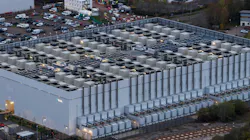
AI workloads are driving significant increases in power density and infrastructure complexity among data centers. As a result, engineers must rethink how safety and operational resilience coexist in these always-on environments.
AI-driven data centers incorporate higher-density computing, on-site power generation, and more complex power architectures. These environments create significant operational and electrical risks, including arc flashes and energized maintenance hazards. And those risks have to be managed against the realities of modern data centers, which maintain aggressive deployment timelines and uptime requirements that leave little room for outages.
Given all that, safety can’t be treated solely as a compliance requirement. Instead, it must become part of a larger operational resilience and risk-management strategy that spans the entire data center lifecycle.
The Safety Complexities of a Modern Data Center
Safety risks affecting both personnel and equipment exist throughout the life of a data center.
During the construction of greenfield facilities, contractors work around electrical and mechanical systems while electricity flows through portions of the facility. Aggressive deployment timelines driven by the AI boom can complicate coordination among contractors, suppliers, and operations teams. Engineers also need to carefully account for how infrastructure will be installed, powered on, and commissioned in phases.
Brownfield projects add another layer of complexity. Often, these facilities weren’t originally designed to support the power densities and cooling demands tied to AI workloads. Retrofitting infrastructure without shutting things down requires careful coordination between engineering, operations, and safety teams to work safely around electrified equipment and to carefully sequence outages.
At the same time, the electrical infrastructure inside data centers is becoming more complex. Facilities now incorporate behind-the-meter power generation, including on-site solar panels, wind turbines, and gas-powered generators. Large-scale battery energy storage systems (BESS) are being deployed as well. Designing visibility, maintainability, and intelligent connectivity into these systems can help limit the risks to both people and equipment.
Some data center owners and operators are now considering what’s next in their power infrastructure, including a switch to DC power distribution. The concept is currently being pushed by a who’s who of the technology industry, including NVIDIA. This offers improved efficiency and support for growing compute demands. However, it also involves addressing increased arc-flash risks, new workforce training needs, and potential supply chain constraints.
Maintaining uptime while protecting workers requires engineers to understand how power generation, storage, distribution, and monitoring systems interact at different stages of the data center’s construction and even during future upgrades.
Safety Strategies for Always-On Data Centers
For modern data centers, safety must be designed both into operations and the infrastructure itself. In practice, that means integrating safety considerations into electrical topologies, equipment selection, and operational and maintenance workflows. This can help optimize safety and uptime during a data center’s lifecycle.
Prior to construction, engineers and project teams should coordinate phased energization schedules, equipment staging, contractor access, and the sequencing of electrical work across the data center’s deployment timeline. Key safety considerations during construction include outage sequencing and access control for energized equipment.
When a facility is operational, good design practices help reduce risks to both people and equipment. For instance, selective coordination and electronic trip devices incorporated into the electrical design will isolate faults more effectively and help ensure equipment is interrupted and operates properly during an electrical event.
Components such as cable cleats can restrain cables during faults to prevent injuries and equipment damage. A comprehensive grounding system also provides predictable fault clearing and reduce touch-voltage and shock risks.
Furthermore, it pays to take maintenance into account, as even routine maintenance tasks in today’s power-hungry data centers can expose personnel to dangerous energy levels.
The 2023 revision of NFPA 70B shifted the standard for electrical equipment maintenance from a recommended practice to a mandatory requirement. Compliance with NFPA 70B shouldn’t be seen as a burden but rather as a resource, because it provides a consistent set of guidelines for electrical safety practices.
Getting Ahead of Uptime Risks in Data Centers
As data centers become increasingly complex and power-intensive, organizations need more proactive safety models focused on reducing risks to personnel and uptime. These models are built on connected visibility and operational intelligence to give electricians and operations teams better insight into infrastructure conditions and worker activity.
For example, monitoring systems can provide visibility into equipment conditions and other sensitive areas in a data center, such as arc-flash boundary zones. Intelligent monitoring and connected sensors also help identify unsafe conditions earlier and improve coordination during maintenance and retrofit activities.
Video analytics play a critical role, too. Cameras used to monitor security risks can function as operational sensors as well, monitoring restricted areas and identifying potential safety hazards.
In addition, wearable devices are able to monitor worker locations and conditions, as well as potentially unsafe movements or activities. This visibility reduces unnecessary exposure to energized systems while improving operational awareness.
These technologies deliver the most value when integrated into the broader electrical infrastructure to provide a comprehensive, real-time view of safety and uptime risks.
Designing Data Centers from the Start for Safety
Safety is more than a compliance requirement in today’s increasingly large and complex data centers. It's becoming a core part of risk management. Designing safety into a data center isn’t only key to keeping workers safe, but it reduces the potential for operational and financial consequences of a safety incident.
An electric shock, arc-flash event, or other incident can force a pause in maintenance activities or disrupt operations in a facility. That inevitably impacts uptime, which in turn comes with business risks.
Tackling these risks requires a rethinking of electrical infrastructure, monitoring and operational systems, and workflows so that safety risks and other potential hazards can be identified further in advance.
About the Author
 Rob Macchi
Rob Macchi
Vice President – Data Center Construction & Global Channel, Wesco
Rob Macchi has held several senior leadership positions since he joined Wesco in 2013. A communications industry professional since 1990, Rob is helping to lead Wesco into and through the full lifecycle of the construction of data centers, which includes bringing together all of Wesco's data center solutions and service offerings. This includes assisting with design, development, and site selection, enabling site power, providing gray space and white space construction and procurement solutions, and providing engineering, design, supply chain and onsite services during the entire lifecycle of the project.
 David Spiedelsbach
David Spiedelsbach
Vice President of Sales and Strategic Initiatives for Electrical & Electronic Solutions, Wesco
David Spiedelsbach is vice president of sales & strategic initiatives for Wesco’s Electrical & Electronic Solutions business, where he leads the Construction and Data Center Global Accounts and Mega Projects organizations. Prior to joining Wesco in 2025, David spent over three decades at Eaton, where he held a series of senior leadership roles across sales, marketing, and product management.
Comment About the Article
To join the conversation, and become an exclusive member of Electronic Design, create an account today!
 Leaders Logo
Leaders relevant to this article: