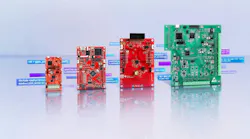
Sponsored by Texas Instruments: AI agents can write code, but they lack the insights of an embedded systems engineer and the reliability and security of an open-source RTOS.
Is legacy jitter analysis masking your signal integrity issues? Learn how to jointly separate jitter and noise, verify high-speed clock trees, and automate PCB fixture de-embedding...
High dV/dt and parasitic ringing hide critical faults in fast-switching designs. Discover how advanced probing and digital triggering isolate gate glitches and dead-time violations...
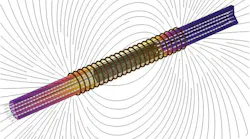
How do electromagnetic fields, heat transfer, and fluid flow interact? See how multiphysics simulation predicts heating performance, cuts design risk, and speeds innovation. Register...
Next-generation battery-management solutions are critical to electrification in world-changing applications, while enabling a circular economy and greener electrification.
When incorporating AI in electronics design, the most important question is not how much of the design process AI can automate, but how to introduce automation while retaining...
As AI evolves from chip design copilots to autonomous agents, physics-aware co-optimization is becoming key to faster, more efficient semiconductor development.
Part 3: Spanning the time from ancient civilizations tracking the stars to MEMS precision timing devices driving modern electronics, explore the remarkable journey that transformed...