Electronic Design Weekly: Aug. 31, 2026 - The Power of PCIe
In This Issue
- Editorial: PCIe in the Fast Lane
- Featured Content
- New Products
- High Speed Serial Connections
- Multimedia on ElectronicDesign
- Editor's Choice: From the ElectronicDesign Archives
- Editor's Weekly Picks
- Illustrated Engineering
- Electronic Design Word of the Week
- New in Electronic Design's Member Library
- More Electronic Design Weekly
Welcome to Electronic Design’s weekly publication, where you’ll find the latest articles, videos, and podcasts. This week’s theme is PCI Express (PCIe). As a key building block of the AI boom, PCIe is evolving faster than ever. While it used to take at least half a decade to roll out the latest standard, new generations of PCIe are coming out roughly every two years now.
Electronic Design’s editors will be covering more than PCIe throughout the week, so check back for the latest articles, videos, and podcasts. You can also sign up for our daily newsletter to get the latest articles as they’re posted, or check out the latest newsletters. You can also explore the archives of Electronic Design Weekly.
Just looking for some quick feedback.

Editorial: PCIe in the Fast Lane
In data centers, PCI Express (PCIe) has cemented itself as the universal, general-purpose data backbone, slinging signals between high-performance CPUs, AI accelerators such as GPUs and TPUs, and other system components like switches, memory, networking cards, and NVMe storage. The combination of high bandwidth and low latency has made it key to keeping up with the deluge of data used in AI.
As AI puts the pressure on existing infrastructure, companies are upgrading to new generations of PCIe and adding more PCIe lanes per chip to push data through systems faster. Manmeet Walia at Synopsys said the aim is to prevent I/O from becoming a bigger bottleneck than it already is: “Compute power is growing much faster than the I/O bandwidth now. Moore’s Law is still helping logic, but the I/Os have been falling behind.”
The gap is pushing PCIe to evolve more rapidly. PCIe Gen 6 is rolling out in data-center infrastructure in 2026, doubling the signaling rate of PCIe Gen 5 to 64 GT/s per lane. PCIe Gen 8, expected in 2028, will quadruple the speed to 256 GT/s per lane. While PCIe has traditionally been used for short connections within servers, that's changing, too. Astera, Credo, Marvell, and other companies are rolling out retimers that can extend PCIe links, enabling longer connections within racks.
"Device-to-device and system-to-system networking is as integral to the data center AI story as individual GPUs and AI ASICs are,” said James Sanders, senior analyst at TechInsights.
The I/O bottleneck is also driving alternatives to PCIe. NVIDIA's NVLink, for example, enables direct, high-speed communication between GPUs and between GPUs and CPUs, bypassing PCIe. With NVLink Fusion, NVIDIA is extending the technology beyond its own ecosystem.
In this week’s issue, we highlight some of the latest developments in PCIe, including a Synopsys test chip that the company said is the first 3D-stackable implementation of PCIe Gen 6. For future coverage, subscribe to Electronic Design’s "Power and Analog" and "Connectivity and Automation" newsletters (click here) and have one or both delivered directly to your inbox.
 dreamstime_mikhaildudarev_7261446
 dreamstime__242867798_id_242867798_c
 jeremiahobrienship_dreamstime_233293137
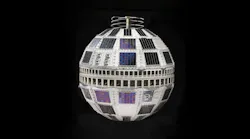 Telstar 1 replica
 dreamstime_wave_break_media_ltd__419592724
 fastevcharging_dreamstime_248204704
 robot assembly line
 dreamstime_leighprather_24363999_promo
 dreamstime_nikitaiurginson_305679026

 Santa Clara Convention Center
 pcie_dreamstime_140363531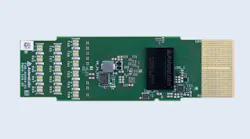

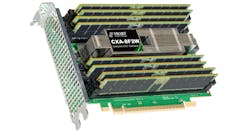 promo_smart_cxa8f2w

Editor's Choice: From the ElectronicDesign Archives
These articles were chosen by the editors at ElectronicDesign that complement the new articles above. They’re included in our regular newsletters.
 dreamstime_craigikegami_869021

 ed_interest_shapeshifting_antenna_fig1_promo

 Test Dreamstime Ryzhov Sergey 131530804

Bill Wong's Picks for the Week
No special theme for me this week. Just some really interesting articles I think you might enjoy.
- Energy harvesting doesn't always need to be electric ...
Electric Swing System Uses Energy Recovery to Optimize Fuel Use and Hydraulic Flow @ Power & Motion
Komatsu developed an electric swing system for its PC365LC-11 excavator that captures and stores energy to help reduce fuel use and better optimize hydraulic flow. - Long range or high throughput? You decide ...
LoRa Transceivers Solve Range vs. Data Rate Tradeoff Conundrum @ Microwaves & RF
Semtech’s LR2022 and LR2012 serve IoT deployment types from cost-optimized sub-GHz sensors to global, multi-band NTN use cases.
Click for my augmented reality picks.
- Ok, I love augmented and virtual reality stuff ...
How Augmented Reality is Changing the Way We Design Machines @ Machine Design
Physical prototypes remain essential, but they no longer need to be the first moment when teams experience a design in context. Augmented reality is moving spatial validation upstream, helping engineers make faster, more informed decisions before production begins. - And one more AR article ...
AI redefines performance metrics for AR optical systems @ Laser Focus World
Artificial intelligence (AI) doesn’t replace the traditional metrics of augmented-reality (AR) optical performance, but it does change how optical engineers prioritize and balance them as the role of an AR optical system for smart glasses shifts from occasional display to a persistent communication interface between users and AI assistants.
Andy's Picks from Around the Web
Andy's Video Pick of the Week
We're on the cusp of battery energy density, with an announcement this week, covered here on electronicdesign.com, of a 500Wh/kg battery cell about to enter production that enables "persistent communications", a.k.a. aerial basestations, in the form of uncrewed aviation systems whose primary energy source is solar power and that can remain aloft 24/7 for several months thanks to the power bridging at night facilitated by those onboard battery cells.
Here's an interesting take on a possibly economically superior solution to next generation comms as compared to the LEO satellites, and their massive rocket launches amounting in the tens of thousands per year, being pursued by companies including SpaceX.
enjoy,
-andyT

My joke turned environmental campaign continues the adventure. I up my drawing game a little along the way too. Read all about it after the jump.
Or, see the rest of my cartoons in the Engineering on Friday comic gallery.
This was among the first cartoons I created for the Inventors cartoon series. Rocks-anne, for example, wasn't created as a recurring character yet and, in retrospect, this image looks like it aged when all it's done is sit on my hard drive for about 5 months. With this one, my cartoon inventory is now fully depleted - should I make more?
I also wasn't as experienced in using AI as my illustrator - I could have done a bit better on the "computer" he created, for example, and could have included a couple of slots for PCIe 1E-09 cards.
enjoy,
-andyT

New in Electronic Design's Member Library
Are you an Electronic Design member? It’s free and you get access to content like our latest eBooks and editorial webinars. You can also provide feedback about articles.
 dreamstime_xxl_218192069
 Reading library book
 EDW TechXchange
About the Author
 William G. Wong
William G. Wong
Senior Content Director - Electronic Design and Microwaves & RF
I am Editor of Electronic Design focusing on embedded, software, and systems. As Senior Content Director, I also manage Microwaves & RF and I work with a great team of editors to provide engineers, programmers, developers and technical managers with interesting and useful articles and videos on a regular basis. Check out our free newsletters to see the latest content.
You can send press releases for new products for possible coverage on the website. I am also interested in receiving contributed articles for publishing on our website. Use our template and send to me along with a signed release form.
Check out my blog, AltEmbedded on Electronic Design, as well as his latest articles on this site that are listed below.
You can visit my social media via these links:
- AltEmbedded on Electronic Design
- Bill Wong on Facebook
- @AltEmbedded on Twitter
- Bill Wong on LinkedIn
I earned a Bachelor of Electrical Engineering at the Georgia Institute of Technology and a Masters in Computer Science from Rutgers University. I still do a bit of programming using everything from C and C++ to Rust and Ada/SPARK. I do a bit of PHP programming for Drupal websites. I have posted a few Drupal modules.
I still get a hand on software and electronic hardware. Some of this can be found on our Kit Close-Up video series. You can also see me on many of our TechXchange Talk videos. I am interested in a range of projects from robotics to artificial intelligence.
 Roger Engelke Jr.
Roger Engelke Jr.
Managing Editor - Electronic Design and Microwaves & RF
Roger manages the websites and print issues for Electronic Design and Microwaves &RF.
 Cabe Atwell
Cabe Atwell
Technology Editor, Electronic Design
Cabe is a Technology Editor for Electronic Design.
Engineer, Machinist, Cartoonist, Maker, Writer. A graduate Electrical Engineer actively plying his expertise in the industry and at his company, Gunhead. When not designing/building, he creates a steady torrent of projects and content in the media world. Many of his projects and articles are online at element14 & SolidSmack, industry-focused work at EETimes & EDN, and offbeat articles at Make Magazine. Currently, you can find him hosting webinars and contributing to Electronic Design and Machine Design.
Cabe is an electrical engineer, design consultant and author with 25 years’ experience. His most recent book is “Essential 555 IC: Design, Configure, and Create Clever Circuits”
Cabe writes the Engineering Life & Engineering on Friday blog on Electronic Design.
See Cabe's cartoons & comic strips here.
 James Morra
James Morra
Senior Editor
James Morra is the senior editor for Electronic Design, covering the semiconductor industry and new technology trends, with a focus on power electronics and power management. He also reports on the business behind electrical engineering, including the electronics supply chain. He joined Electronic Design in 2015 and is based in Chicago, Illinois.
 Andy Turudic
Andy Turudic
Technology Editor, Electronic Design
Andy Turudic is a Technology Editor for Electronic Design Magazine, primarily covering Analog and Mixed-Signal circuits and devices and also is Editor of ED's bi-weekly Automotive Electronics newsletter.
He holds a Bachelor's in EE from the University of Windsor (Ontario Canada) and has been involved in electronics, semiconductors, and gearhead stuff, for a bit over a half century. Andy also enjoys teaching his engineerlings at Portland Community College as a part-time professor in their EET program.
"AndyT" brings his multidisciplinary engineering experience from companies that include National Semiconductor (now Texas Instruments), Altera (Intel), Agere, Zarlink, TriQuint,(now Qorvo), SW Bell (managing a research team at Bellcore, Bell Labs and Rockwell Science Center), Bell-Northern Research, and Northern Telecom.
After hours, when he's not working on the latest invention to add to his portfolio of 16 issued US patents, or on his DARPA Challenge drone entry, he's lending advice and experience to the electric vehicle conversion community from his mountain lair in the Pacific Northwet[sic].
AndyT's engineering blog, "Nonlinearities," publishes the 1st and 3rd Tuesday of each month. Andy's OpEd may appear at other times, with fair warning given by the Vu meter pic. His cartoon series, "Inventors", appears each week in Electronic Design Weekly.
Comment About the Article
To join the conversation, and become an exclusive member of Electronic Design, create an account today!
 Leaders Logo
Leaders relevant to this article: